
Möchten Sie diese Lösung erstmalig versuchen?
Kontaktieren Sie unser Team noch heute und fordern Sie ein Angebot für Ihr QIAwave DNA Blood & Tissue Kit (50) Test-Kit an.
QIAwave DNA Blood & Tissue Kit (50) icon_0368_ls_gen_eco_friendly-s
Kat.-Nr. / ID. 69554
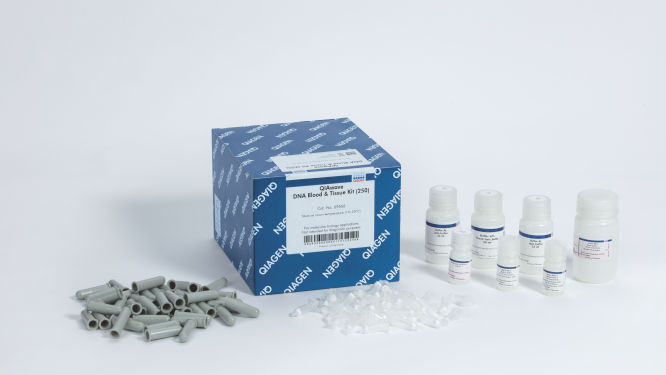
50 DNeasy Mini Spin Columns, Proteinase K, Puffer, Waste Tubes (2 ml).
Anmelden Um Ihre Preise zu sehen.
KitENNewKit component
Eco-friendlier kit
Eco-friendlier Collection Tubes
Präparationen
50
250
QIAwave DNA Blood & Tissue Kit ist für molekularbiologische Anwendungen vorgesehen. Dieses Produkt ist nicht für die Diagnose, Prävention oder Behandlung einer Krankheit bestimmt.
Möchten Sie diese Lösung erstmalig versuchen?
Kontaktieren Sie unser Team noch heute und fordern Sie ein Angebot für Ihr QIAwave DNA Blood & Tissue Kit (50) Test-Kit an.
Eigenschaften
- DNA-Qualität und Leistung identisch mit dem DNeasy Blood & Tissue Kit
- Bis zu 62 % weniger Plastik und bis zu 58 % weniger Pappkarton im Vergleich zum DNeasy Blood & Tissue Kit
- Wiederverwendbare Waste Tubes aus 100 % recyceltem Kunststoff
- Pufferkonzentrate, die bis zu 90 % weniger Kunststoff benötigen als unsere Standardpuffer
Angaben zum Produkt
Das QIAwave DNA Blood & Tissue Kit ist eine umweltfreundlichere Version unseres Standard DNeasy Blood & Tissue Kits. Das Kit verwendet bis zu 62 % weniger Kunststoff und bis zu 58 % weniger Pappkarton als unser Standardkit sowie Abfallröhrchen aus 100 % recyceltem Kunststoff, die Sie während des gesamten Verfahrens wiederverwenden können. QIAwave-Puffer werden als Konzentrate bereitgestellt, was die Plastikmenge pro Flasche um bis zu 90 % reduziert. Um Papier zu sparen, enthält das Kit keine ausgedruckten Protokolle. Sie können die Protokolle unter Ressourcen herunterladen oder den QR-Code auf dem Deckel des Kits scannen. Auch wenn die Verpackung und die Komponenten unseres QIAwave Kit anders aussehen, ist es genauso einfach zu verwenden wie unser Standardkit, und die Chemie und Leistung sind identisch. Bitte beachten Sie, dass Sie zum Rekonstituieren der Puffer sterile Glasflaschen benötigen.
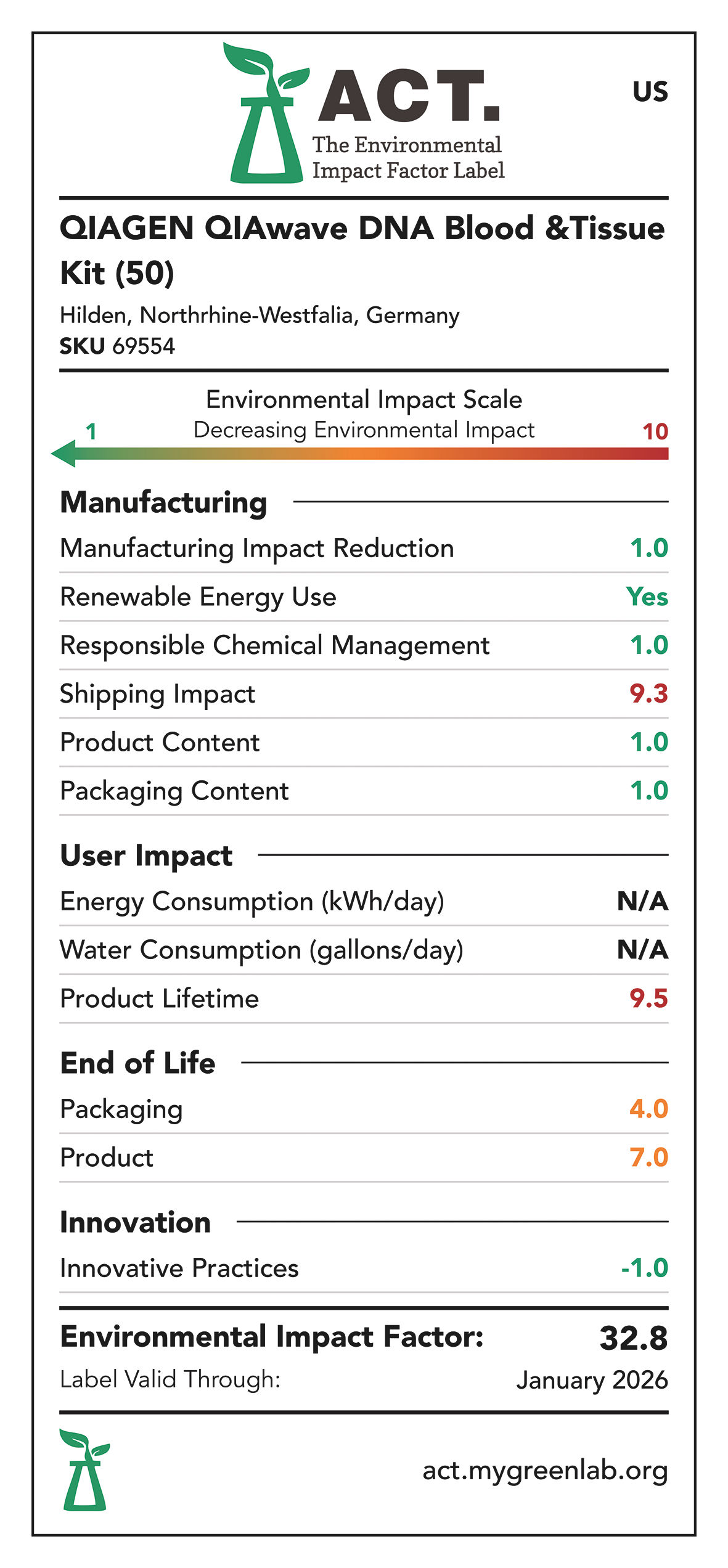
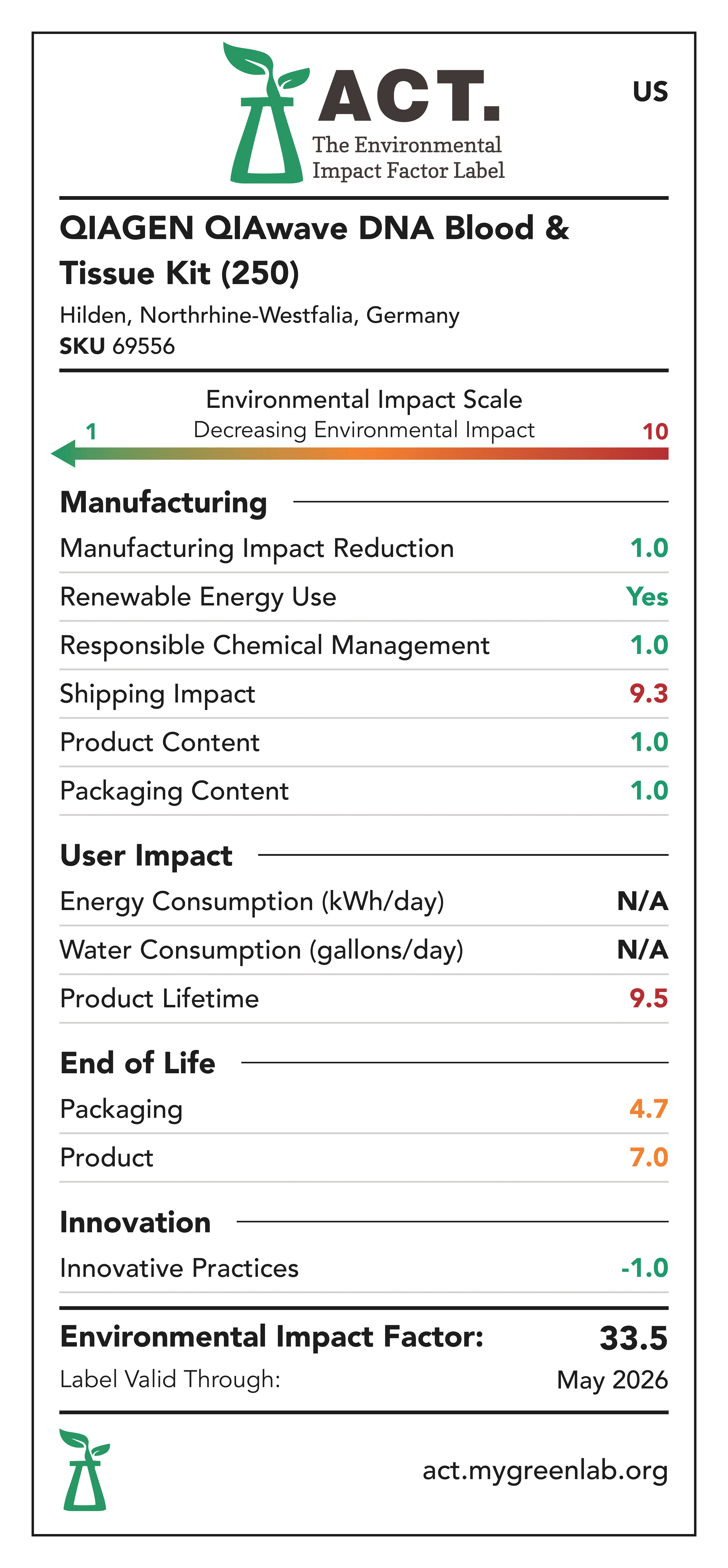
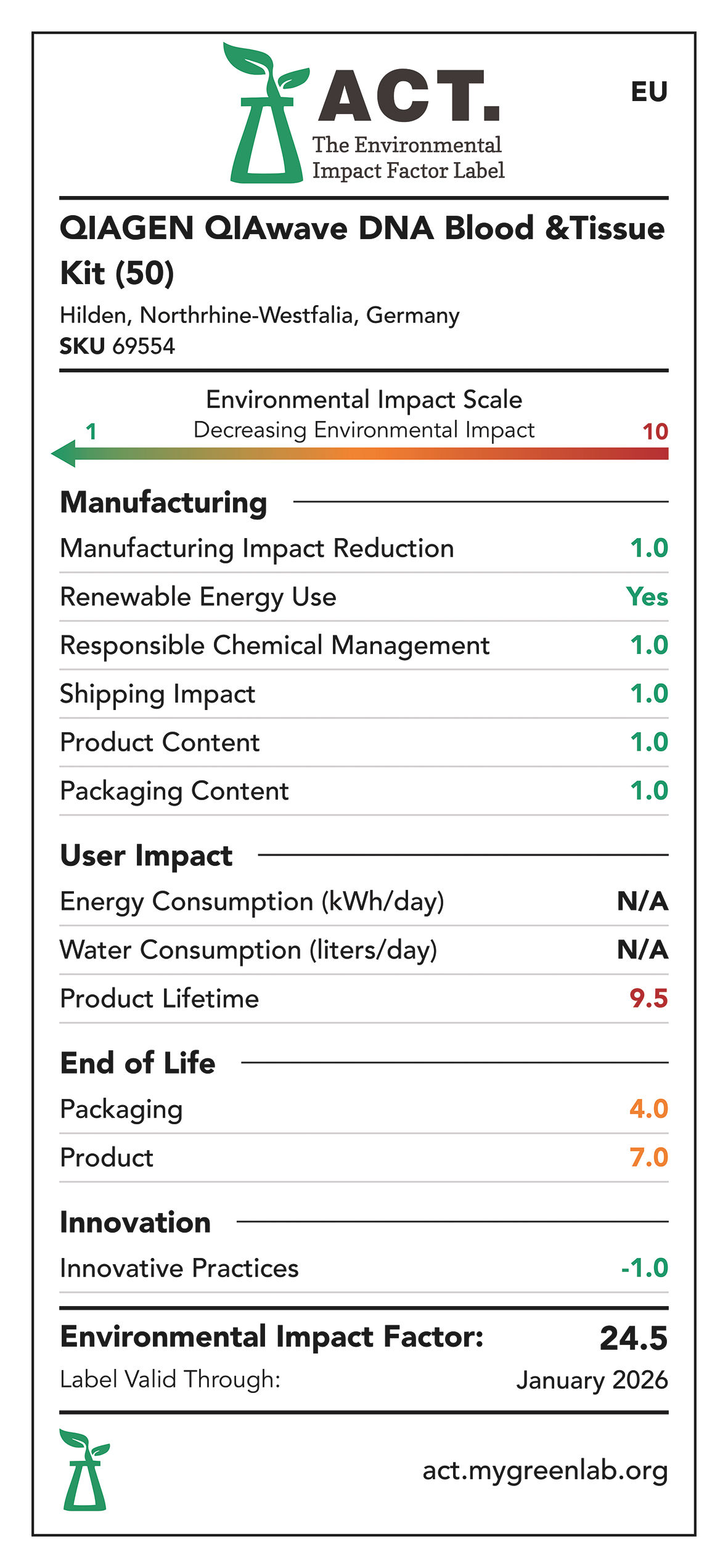
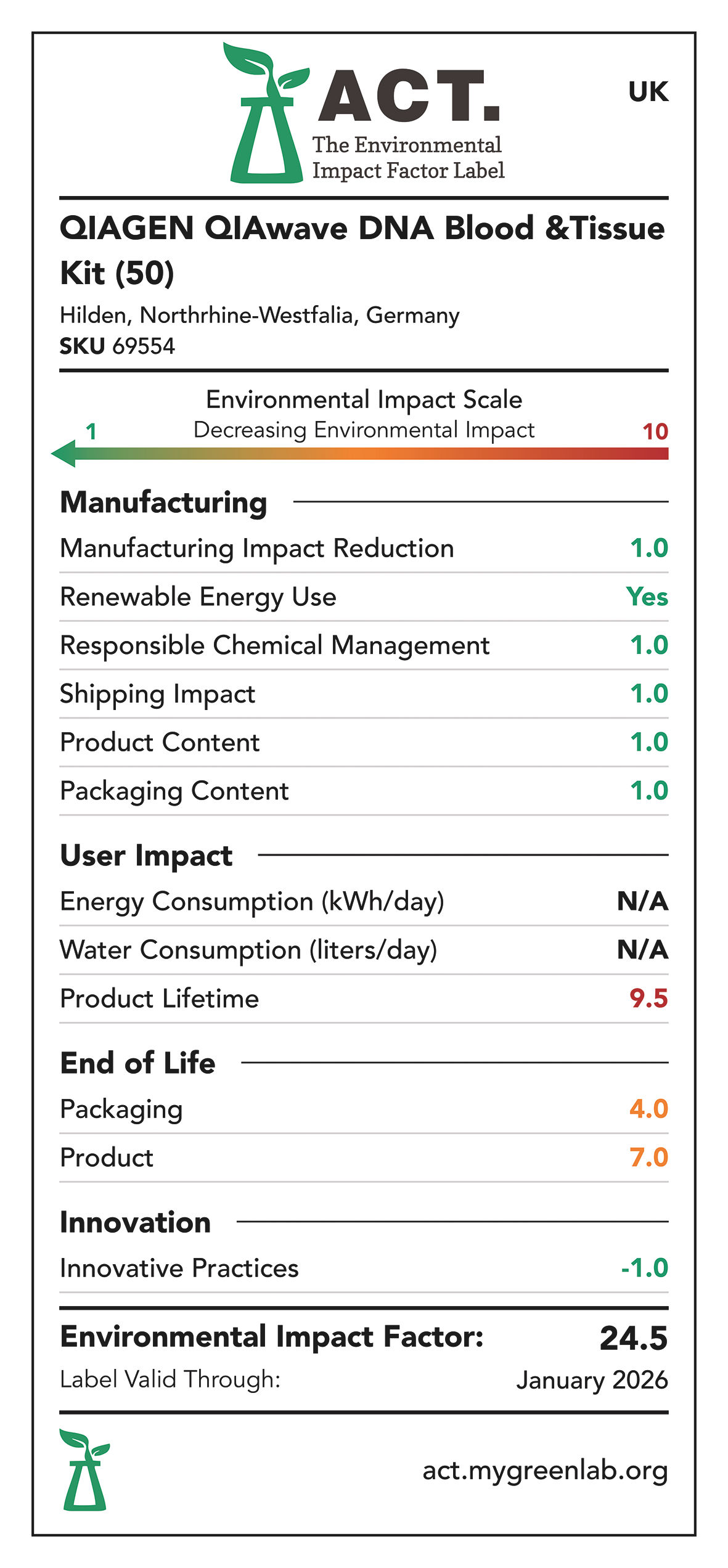
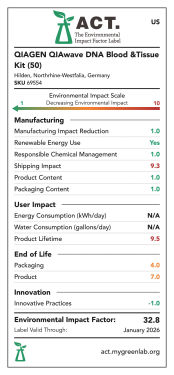
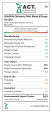
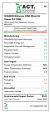
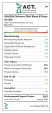
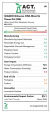
Gemeinsam mit My Green Lab haben wir die Umweltverträglichkeit dieses Kits untersucht. My Green Lab ACT-Labels bewerten und benoten Produkte nach verschiedenen Nachhaltigkeitskriterien:
• Herstellung
• Verantwortungsvoller Umgang mit Chemikalien
• Nachhaltige Inhaltsstoffe bei Produkten und Verpackungsmaterialien
• Entsorgung der Verpackung am Ende des Lebenszyklus
Die Produkte werden von 1–10 bewertet, mit Ausnahme des Energie- und Wasserverbrauchs, der mit 1 Punkt/kWh bzw. Gallone (3,785 Liter) bewertet wird. Eine niedrige Punktzahl bedeutet eine geringere Wirkung (siehe Abbildungen „QIAwave DNA Blood & Tissue Kit ACT-Label US 50/ 250, EU 50/ 250 und UK 50/ 250“).


Das QIAwave Kit verwendet Spin-Säulen auf Silikabasis für die Aufreinigung, und die meisten Proben können direkt mit Proteinase K lysiert werden:
• Kein mechanischer Aufschluss
• Keine organische Extraktion
• Keine Alkoholausfällung
Mit dem Standardprotokoll können Sie Gesamt-DNA aus Tierblut und -gewebe extrahieren. Wir haben auch Protokolle für andere Probentypen entwickelt, um sicherzustellen, dass Sie reproduzierbare Mengen an qualitativ hochwertiger DNA erhalten, ganz gleich, ob Sie in Sie in den Bereichen Biowissenschaften, Genotypisierung oder veterinärmedizinische Pathogenforschung tätig sind. Sie können Ihre Probenextraktion auch mit dem QIAcube Connect automatisieren.
Leistung
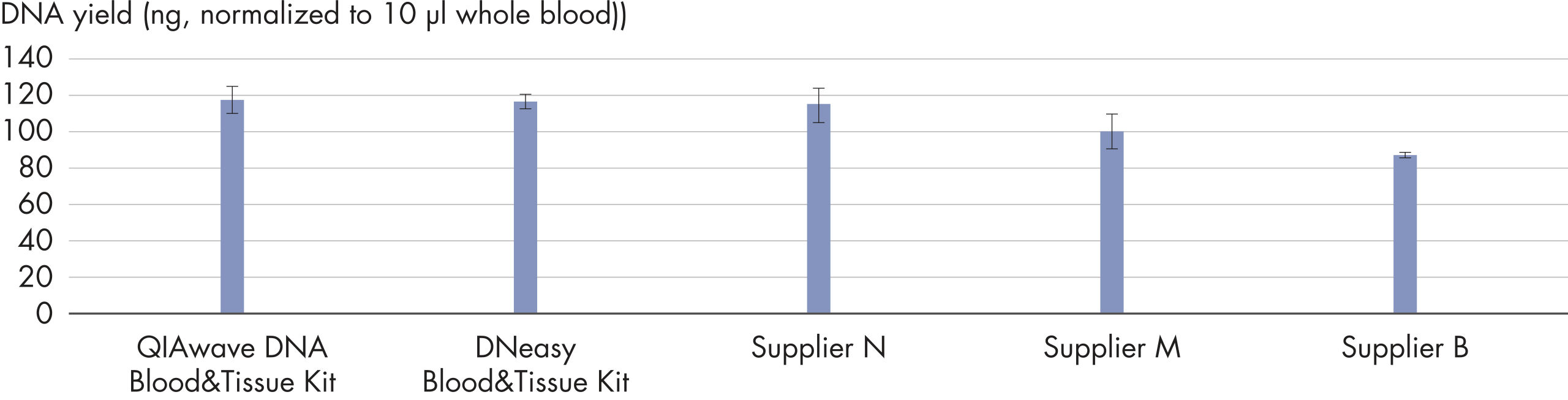
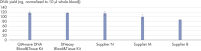
Die Leistung des QIAwave DNA Blood & Tissue Kits und des DNeasy Blood & Tissue Kits ist identisch, da die Chemie dieselbe ist. Wir haben auch gezeigt, dass beide Kits die Kits der Konkurrenz übertreffen (siehe Abbildung „ Leistung des QIAwave DNA Blood & Tissue Kits“).
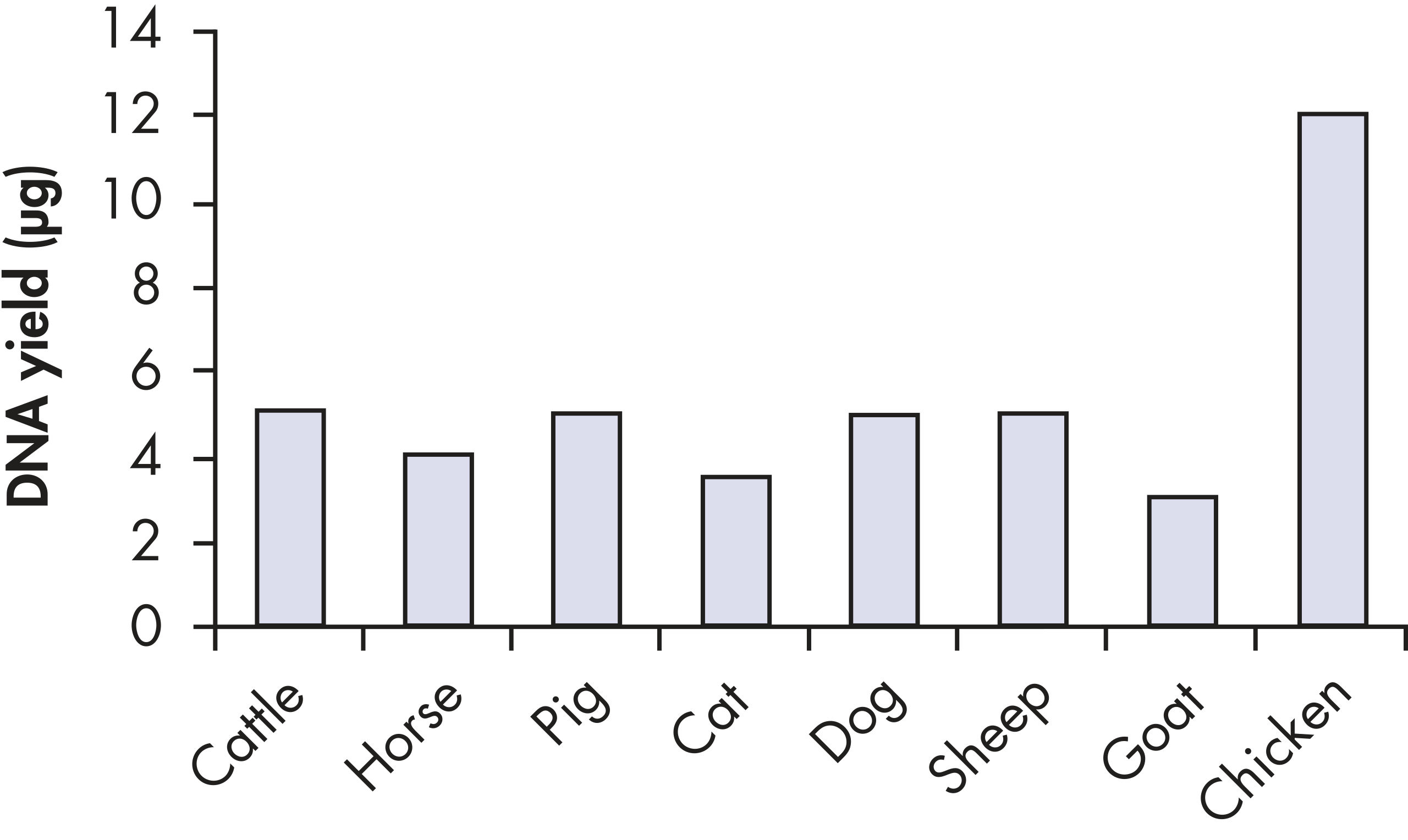
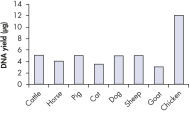
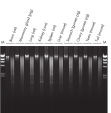
Das Standardprotokoll des QIAwave DNA Blood & Tissue Kit liefert hohe Ausbeuten an Gesamt-DNA aus tierischen Blut- und Gewebeproben (siehe Tabelle „Typische DNA-Ausbeute aus tierischen Geweben mit QIAwave DNA Blood & Tissue“ und Abbildung „DNA-Ausbeuten“). Wir bieten jedoch auch optimierte Protokolle an, um auch bei nicht standardisierten Proben hohe Ausbeuten zu gewährleisten, z. B:
- Tierhaare
- Zellkulturen
- Gram-positive und -negative Bakterien
- Hefe
- Insekten
- Andere Probenarten
Typische Ausbeute aus tierischen Geweben mit dem QIAwave DNA Blood & Tissue Kit
| Quelle | Menge | DNA (µg) |
| Säugetierblut | 100 µl | 3–6 |
| Vogelblut | 5 µl | 9–40 |
| HeLa-Zellen | 2 x 10⁶ | 15–25 |
| Leber | 25 mg | 10–30 |
| Gehirn | 25 mg | 15–30 |
| Niere | 25 mg | 15–30 |
| Milz | 10 mg | 5–30 |
| Mausschwanz | 1,2 cm (Spitze) | 10–25 |
| Rattenschwanz | 0,6 cm (Spitze) | 20–40 |
| Schweineohr | 25 mg | 10–30 |
| Pferdehaar | 10 Haare | 2–4 |
| Fischflosse | 20 mg | 10–20 |
| Fischlaich (Makrele) | 10 mg | 5–10 |
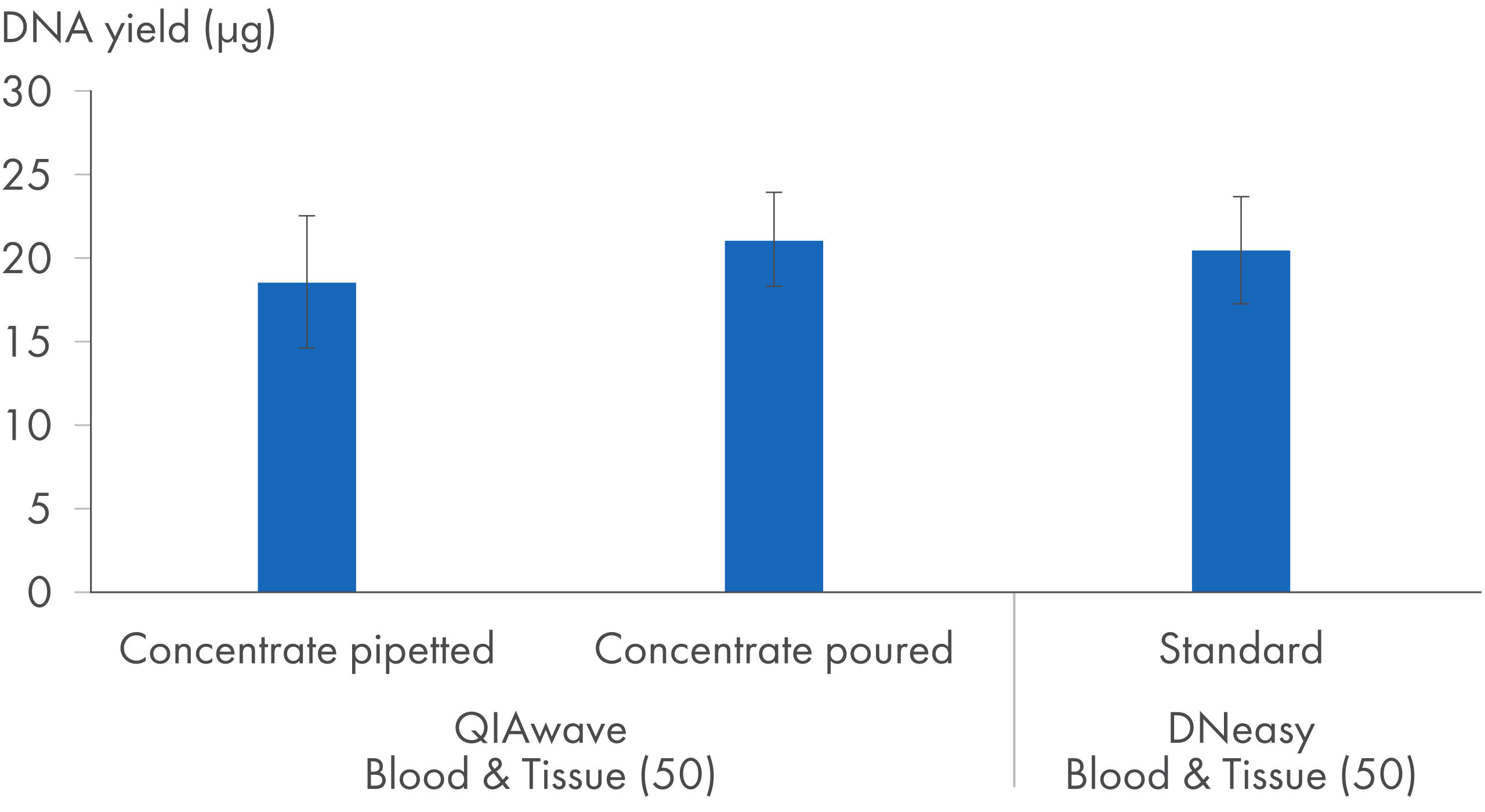
Wir haben auch die DNA-Ausbeuten verglichen, die mit den Puffern des QIAwave DNA Blood & Tissue Kit (50), hergestellt durch Pipettieren oder Gießen, und den Standardpuffern des DNeasy Blood & Tissue Kit (50) erzielt wurden. Beide Methoden führen zu vergleichbaren DNA-Ausbeuten, wie in der Abbildung „ Umgang mit Pufferkonzentraten“ dargestellt.
Prinzip
Das QIAwave DNA Blood & Tissue Kit ermöglicht die schnelle Aufreinigung von Gesamt-DNA (z. B. genomische, mitochondriale und pathogene DNA) aus verschiedenen Probentypen, einschließlich frischer oder gefrorener tierischer Gewebe und Zellen, Blut oder Bakterien.
Die Membran kombiniert die Bindungseigenschaften einer silikabasierten Membran mit einfacher Mikrospin-Technologie. Die DNA adsorbiert an der Membran in Gegenwart hoher Konzentrationen von chaotropem Salz, das hydratisierten Molekülen in Lösung Wasser entzieht. Die Pufferbedingungen ermöglichen eine spezifische Adsorption der DNA an die Silikamembran und die Entfernung von Verunreinigungen und Enzyminhibitoren.
Der gesamte Aufreinigungsprozess erfordert keine Phenol- oder Chloroformextraktion oder Alkoholausfällung und nur eine minimale Handhabung, was bedeutet, dass Sie problemlos mehrere Proben gleichzeitig bearbeiten können.
Verfahren
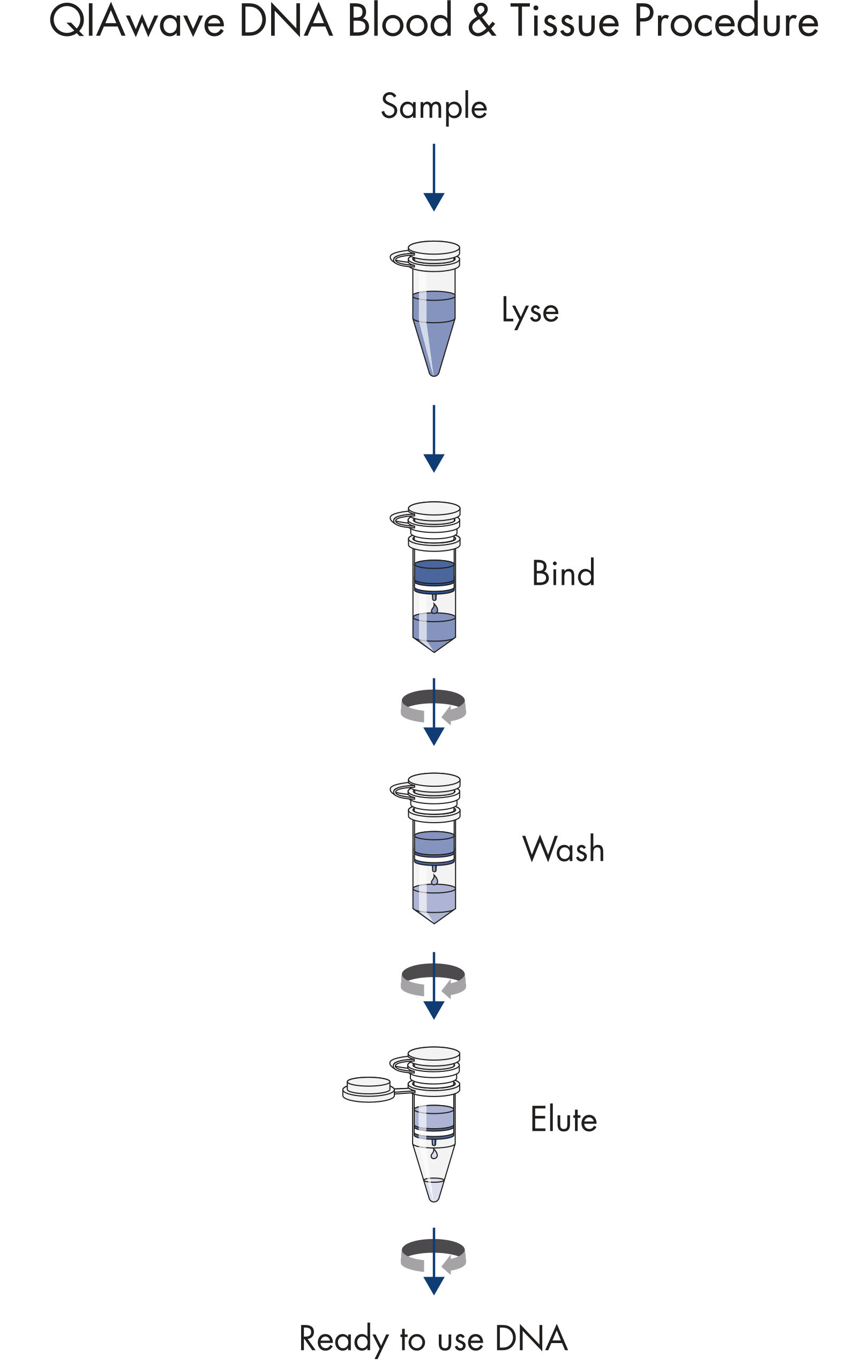
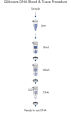
Das QIAwave DNA Blood & Tissue Kit reinigt DNA mit DNeasy Mini Spin Columns, die eine Silikamembran enthalten. Dies macht das Verfahren schnell und reproduzierbar und eliminiert manuelle und organische Extraktion oder Alkoholausfällung (siehe Ablaufdiagramm „ QIAwave DNA Blood & Tissue Kit-Verfahren“).
Vier einfache Schritte zur Aufreinigung hochwertiger DNA:
- Die Proben in Proteinase K lysieren. Die Pufferbedingungen bieten optimale DNA-Bindebedingungen.
- Das Lysat auf die DNeasy Mini Spin Column laden.
- Proben zentrifugieren. Die DNA wird selektiv an die Membran gebunden, während Verunreinigungen durchlaufen.
- Verbleibende Verunreinigungen und Enzyminhibitoren werden dann in zwei effizienten Waschschritten entfernt. Die DNA wird anschließend in Wasser oder Puffer eluiert und ist dann gebrauchsfertig.
QIAwave-Puffer werden als Konzentrate geliefert und lassen sich durch Zugabe von Wasser und/oder Ethanol leicht rekonstituieren; Einzelheiten entnehmen Sie bitte dem Handbuch. QIAwave DNeasy Mini Spin Columns und Waste Tubes werden in separaten Beuteln geliefert und müssen vor Beginn des Protokolls zusammengesetzt werden. Das kostet zwar etwas mehr Zeit, reduziert aber den Plastikmüll.
Das QIAwave DNA Blood & Tissue Kit kann auf dem QIAcube Connect unter Verwendung der DNeasy Blood & Tissue Kit-Protokolle automatisiert werden.
Anwendungen
QIAwave DNA Blood & Tissue liefert qualitativ hochwertige DNA, die in allen nachgelagerten Assays verwendet werden kann, einschließlich Anwendungen in:
- Biowissenschaftliche Forschung
- Viehzucht
- Stammbaum-Genotypisierung
- Erforschung von Pathogenen in der Veterinärmedizin
- Routinetests
Ergänzende Daten und Abbildungen
QIAwave DNA Blood & Tissue Kit (50) ACT-Umweltverträglichkeitslabel USA.
Die ACT-Umweltverträglichkeitslabels wurden dafür entwickelt, Produkte nach verschiedenen Nachhaltigkeitskriterien zu bewerten und einzustufen. Produkte werden mit 1–10 Punkten bewertet, mit Ausnahme von Energie- und Wasserverbrauch, die mit 1 Punkt pro kWh bzw. Gallone (3,785 Liter) bewertet werden. Je niedriger die Punktzahl, desto geringer die Umweltbelastung. Das QIAwave DNA Blood & Tissue Kit (50) hat in den USA einen um 21,5 % niedrigeren EIF als das entsprechende Standardkit, das DNeasy Blood & Tissue Kit (50).

Spezifikationen
| Eigenschaften | Spezifikationen |
|---|---|
| Applications | NGS, PCR, Real-time PCR, Genotypisierung |
| Elution volume | 100–200 µl |
| Time per run or per prep | 20 Minuten |
| Main sample type | Blut, Gewebe |
| Format | Spin-Säule |
| Sample amount | 100 µl Blut / 25 mg Gewebe / 5 x 10⁶ kultivierte Zellen |
| Processing | Manuell oder QIAcube Connect |
| Yield | 5 – 30 µg |
| Technology | Silika-Technologie |
| Purification of total RNA, miRNA, poly A+ mRNA, DNA or protein | DNA |
Ressourcen
Scientific Posters (3)
Quick-Start Protocols (1)
Broschüren und Leitfäden (2)
Kit Handbooks (1)
Safety Data Sheets (1)
Certificates of Analysis (1)
FAQ
How do I safely inactivate biohazardous flow-through material?
Do you have a protocol for purification of total DNA from yeast?
Do you have a protocol for purification of total DNA from insects?
Do you have a protocol for purification of total DNA from crude lysates?
How can I precipitate genomic DNA using isopropanol?
What is the shelf-life for QIAGEN Proteinase K (cat. no. 19131, 19133)?
Are there important considerations for plasma generation and urine handling?
What water should I use to prepare the buffer concentrates?
What is the new Waste Tube made of?
Does the reuse of the Waste Tubes increase the risk of cross-contamination?
I don’t have any glassware in the lab, is the QIAwave kit still a good option for me?
Are the QIAwave kits based on a different chemistry than the legacy kits?
Is there a way to compare the environmental impacts of the kit?
Can the QIAwave kits be recycled?
What is the composition of buffer AE?
Do you have a protocol for the isolation of genomic DNA from sperm?
Do you have a protocol for isolation of genomic DNA from saliva and mouthwash?
Do you have a protocol for the isolation of DNA from soft tissues using the TissueLyser?