QIAwave DNA Blood & Tissue Kit – Eco-friendlier DNA Extraction

動物の血液や組織、細胞、酵母、細菌から全DNAを抽出するための標準キットの代替として、より環境に優しいキット

このソリューションをお試しになりませんか?
今すぐ当社のチームにご連絡の上、QIAwave DNA Blood & Tissue Kit(50) トライアルキットの見積りをご依頼ください。

QIAwave DNA Blood & Tissue Kit(50) icon_0368_ls_gen_eco_friendly-s

カタログ番号 / ID.   69554

DNeasyミニスピンカラム50本、プロテイナーゼK、バッファー、廃液チューブ(2 ml) 
CHF 295.00
ログイン アカウントの価格を確認するには
KitJANewKit component
Eco-friendlier kit
Eco-friendlier Collection Tubes
調製
50
250
QIAwave DNA Blood & Tissue Kitは分子生物学的アプリケーション用であり、疾病の診断、予防、あるいは治療に使用することはできません。
このソリューションをお試しになりませんか?
今すぐ当社のチームにご連絡の上、QIAwave DNA Blood & Tissue Kit(50) トライアルキットの見積りをご依頼ください。

特徴

  • DNeasy Blood & Tissue Kitと同等のDNAの品質と性能
  • DNeasy Blood & Tissue Kitと比較して、プラスチックの使用量を最大62%、段ボールの使用量を最大58%削減
  • 再使用可能な排液チューブは、消費後にリサイクルされたプラスチック100%で製造
  • 当社の標準バッファーと比較して、プラスチックの使用量を最大90%削減した濃縮バッファー


製品詳細

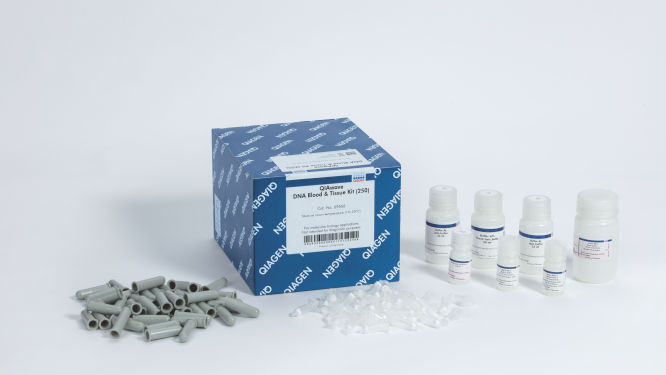
QIAwave DNA Blood & Tissue Kitは、当社の標準DNeasy Blood & Tissue Kitの環境に優しいバージョンです。このキットは、標準キットと比較してプラスチックの使用量を最大62%、段ボールの使用量を最大58%削減しており、ポストコンシューマーリサイクルプラスチック100%で作られた廃液チューブは、プロセス全体で再利用できます。QIAwaveバッファーは濃縮液として提供され、1ボトルあたり最大90%のプラスチック削減を実現しています。紙の節約のため、キットには印刷されたプロトコールは含まれていません。プロトコールはリソースからダウンロードするか、キットの蓋にあるQRコードをスキャンして入手できます。QIAwave Kitのパッケージやコンポーネントは外見が異なりますが、使いやすさは標準キットと変わらず、化学的特性や性能も同一です。なお、バッファーを再構成するためには、滅菌されたガラス製のボトルが必要です。

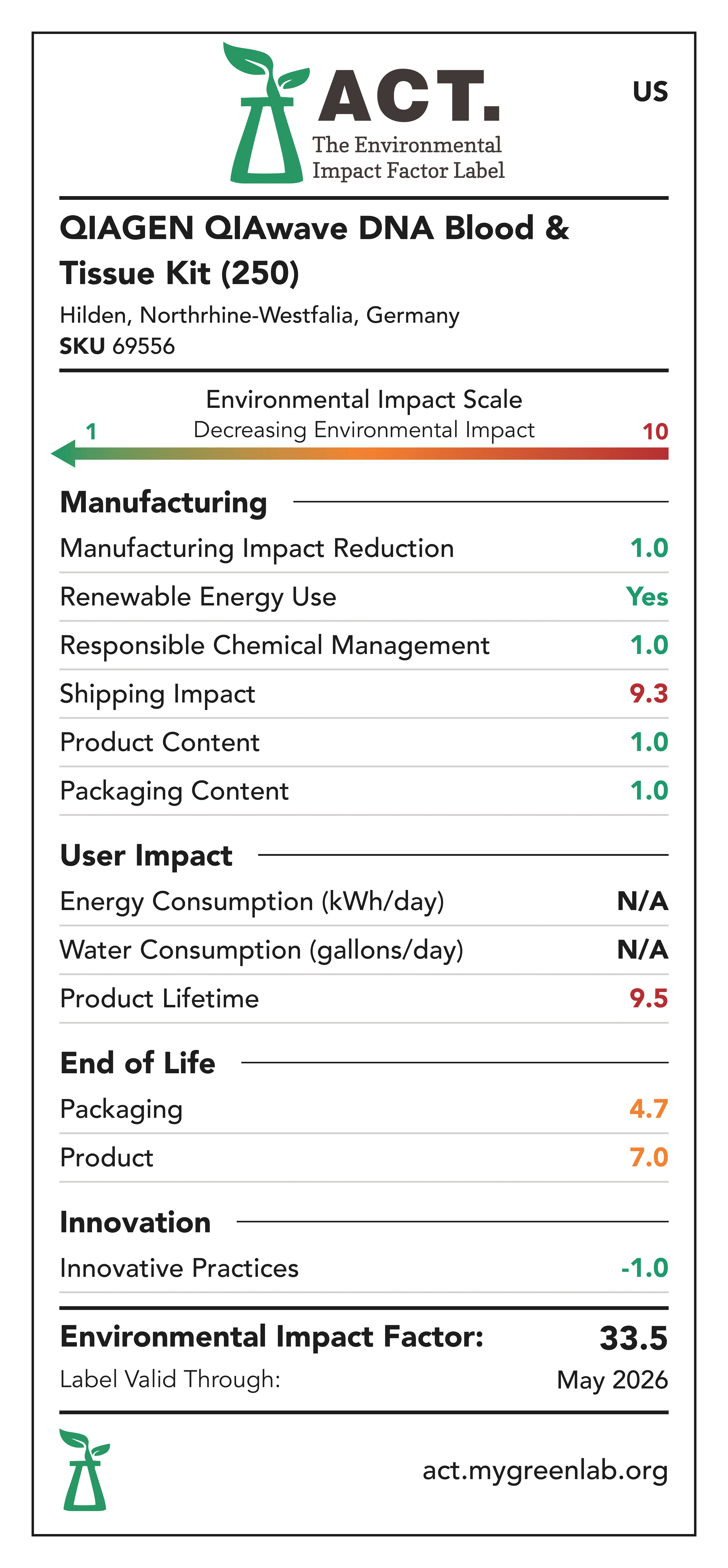
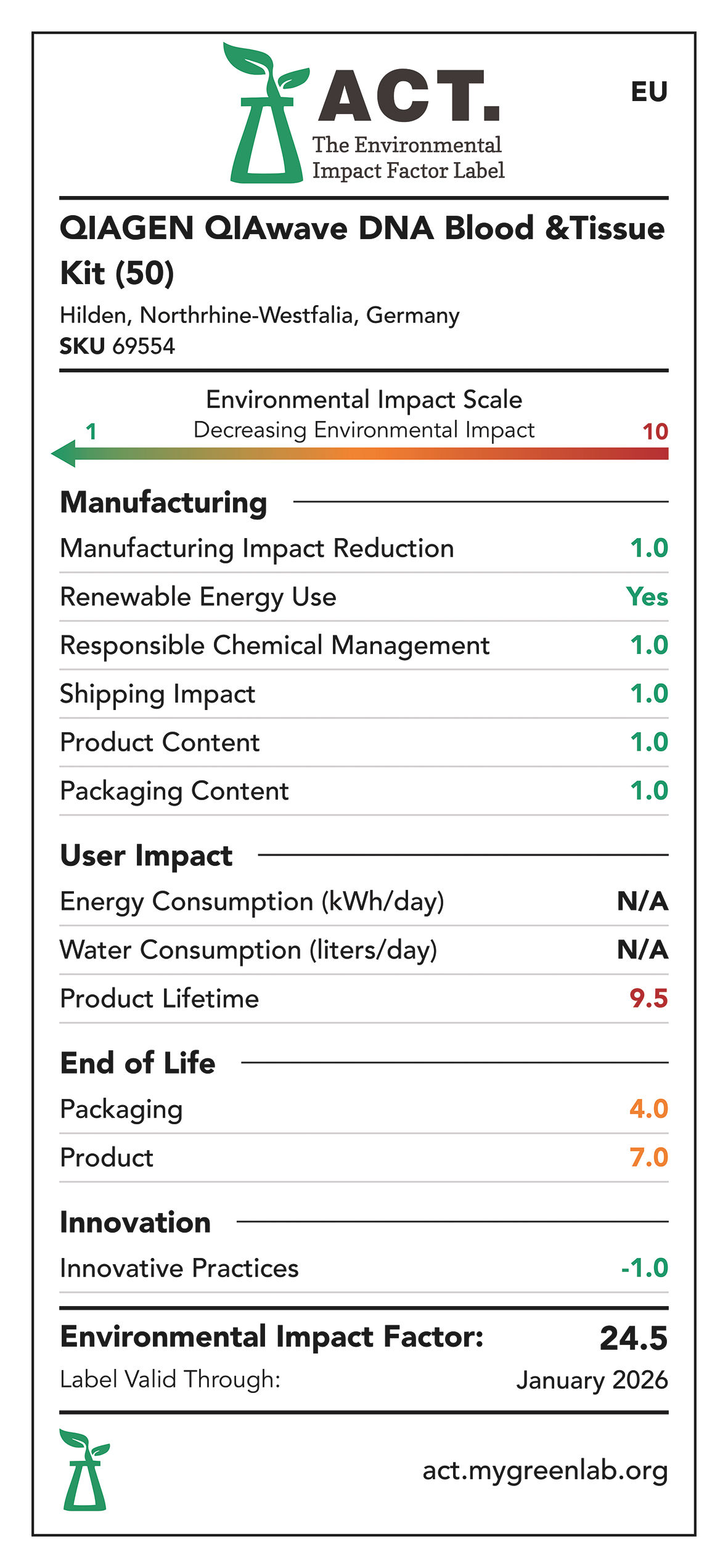
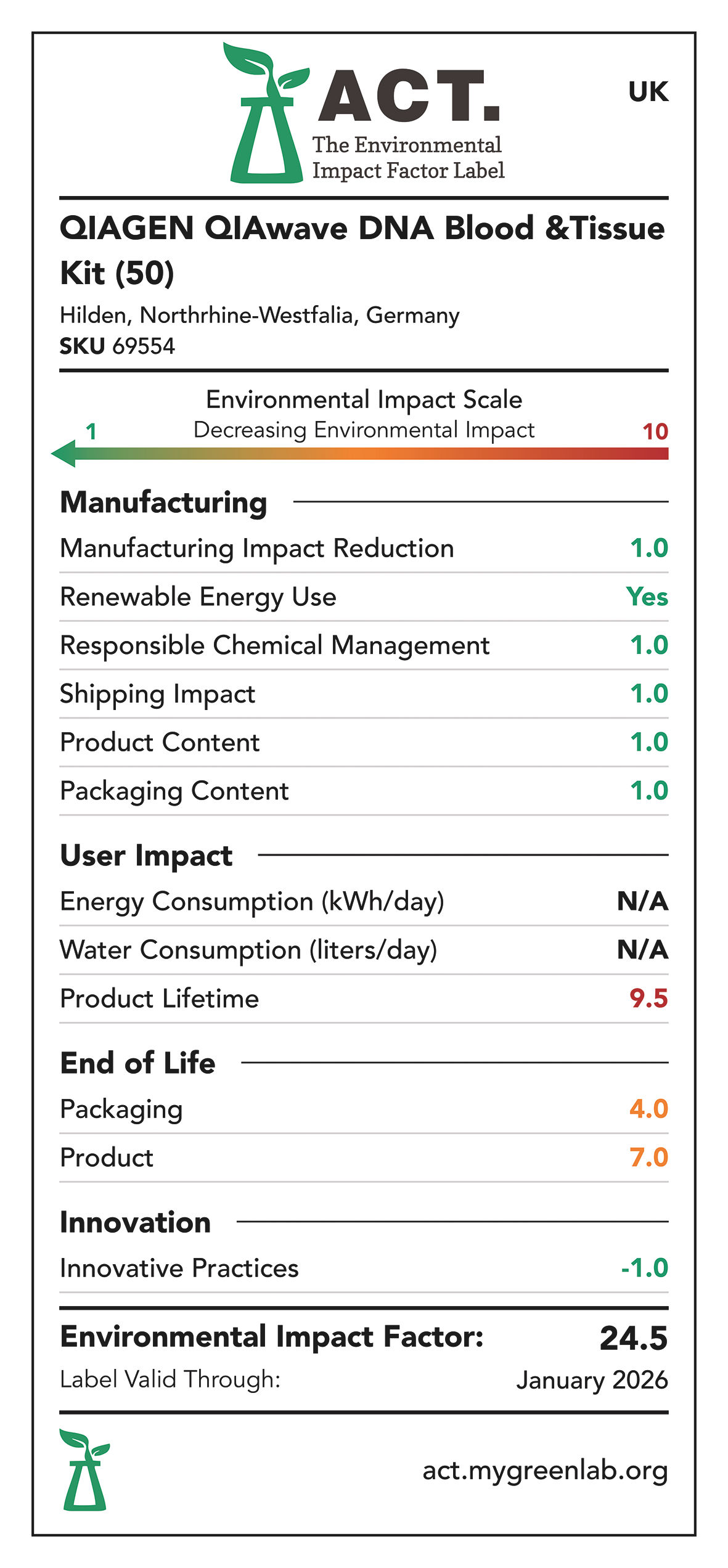
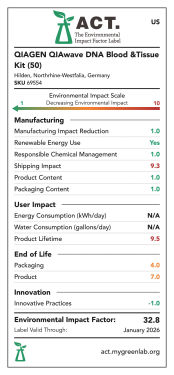
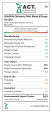
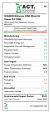
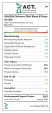
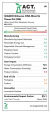
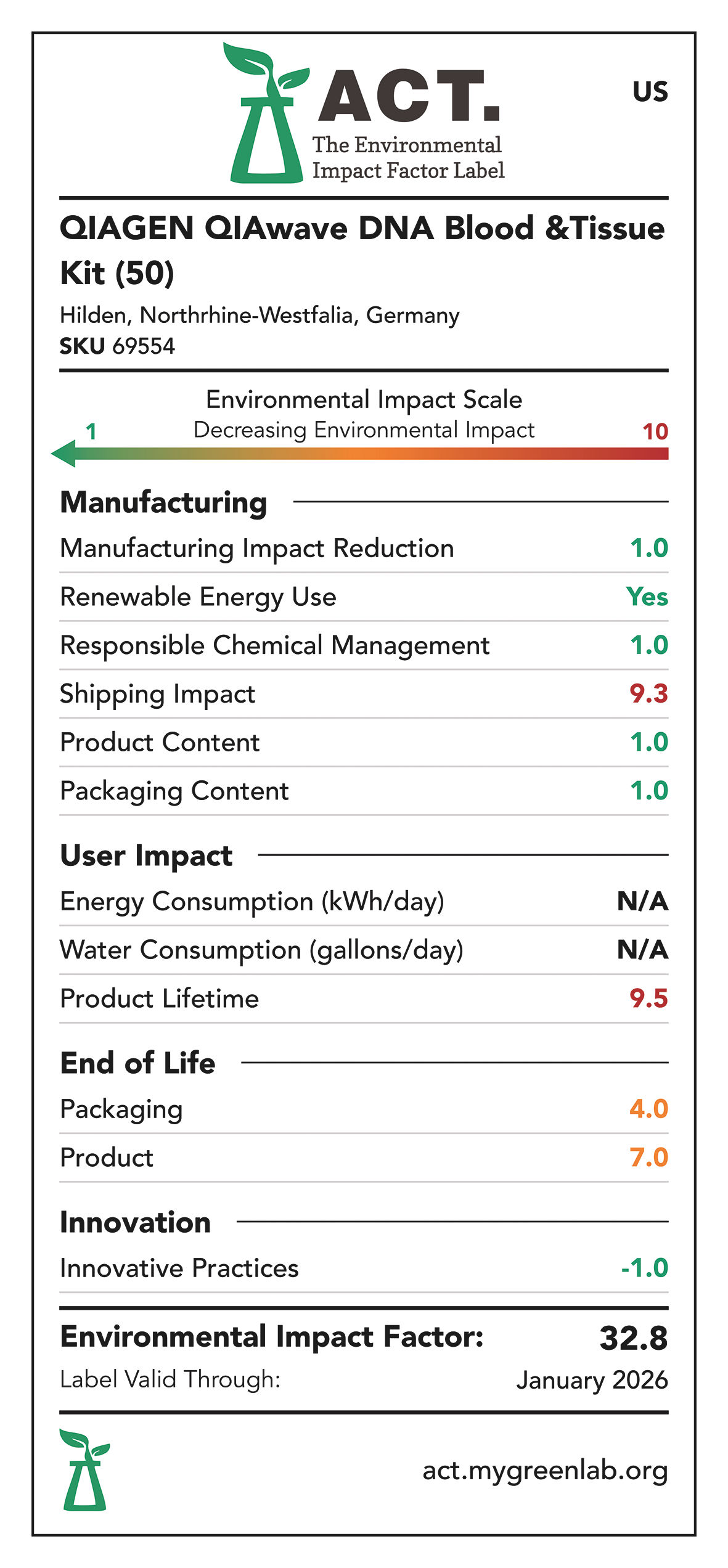
当社は、My Green Labと提携し、このキットの環境への影響を評価しました。My Green Lab ACTラベルは、複数の持続可能性基準に基づいて製品を評価し、スコアを付けています。

• 製造
• 化学的管理の責任
• 製品とパッケージ材料内のサステナブルなコンテンツ
• 寿命終了時のパッケージ処理

製品には1から10のスコアが付けられ、エネルギーと水の消費については、それぞれkWhまたはガロンごとに1点が付けられます。低いスコアは、環境への影響が低いことを意味します。(「QIAwave DNA Blood & Tissue Ki ACTラベル US  50/ 250、EU  50/ 250、UK  50/ 250」を参照)。
QIAwave Kitは精製にシリカベースのスピンカラムを使用し、ほとんどのサンプルはプロテイナーゼKを使って直接溶解できます。つまり、

• 機械的破砕が不要
• 有機溶媒による抽出が不要
• アルコール沈殿が不要

標準プロトコールでは、動物の血液および組織から全DNAを抽出できます。また、研究分野がライフサイエンス、遺伝子型決定、獣医学的病原体研究であっても、再現性のある高品質なDNAを得られるよう、他のサンプルタイプに対応するプロトコールも開発しました。さらに、サンプル抽出はQIAcube Connectを使用することで自動化も可能です。
パフォーマンス

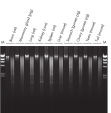
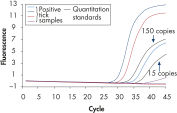
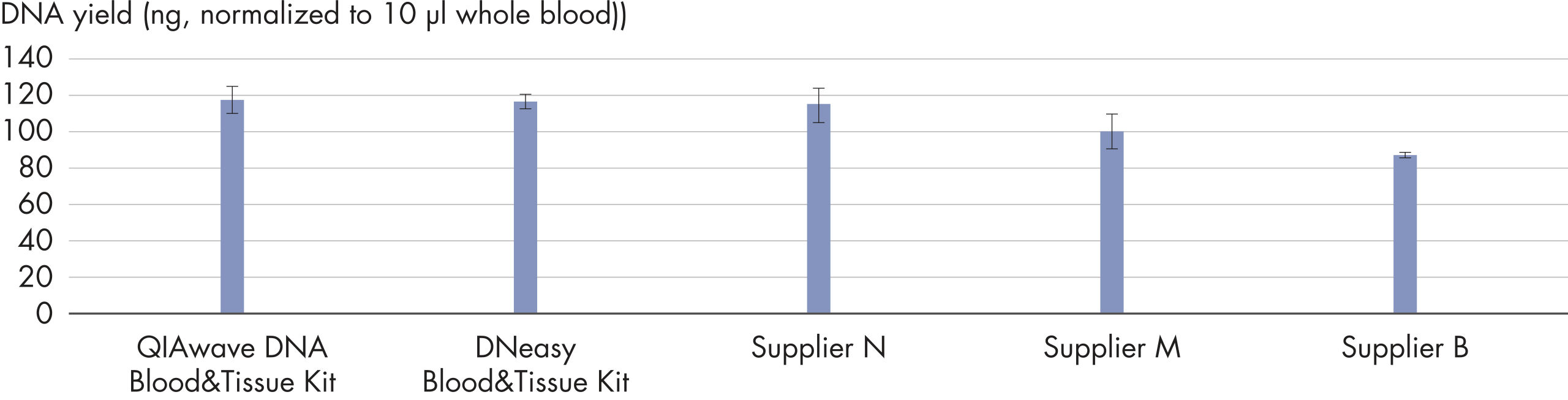
QIAwave DNA Blood & Tissue KitとDNeasy Blood & Tissue Kitは、化学成分が同じであるため、性能に違いはありません。また、どちらのキットも競合他社のキットよりも優れていることが実証されています(図「 QIAwave DNA Blood & Tissue Kitの性能」を参照)。
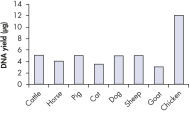
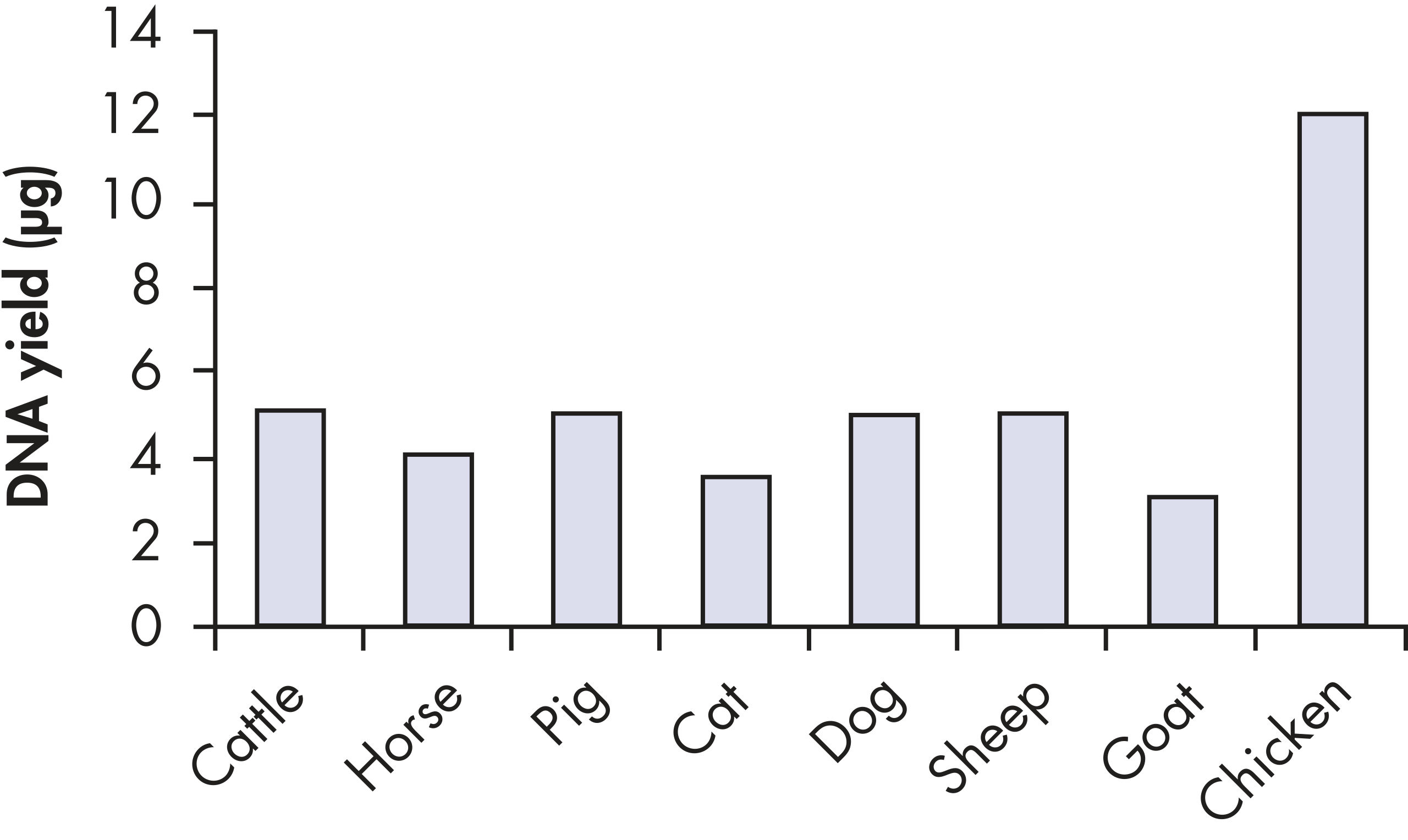
QIAwave DNA Blood & Tissue Kitの標準プロトコールを使用すれば、動物の血液および組織サンプルから高収量で全DNAを抽出できます(表「QIAwave DNA Blood & Tissueを使用した動物組織からの一般的なDNA収量」および図 「DNA収量」を参照)。さらに、次のような非標準サンプルでも高収量を確保できるように最適化されたプロトコールも提供しています。

  • 獣毛
  • 培養細胞
  • グラム陽性菌、グラム陰性菌
  • 酵母
  • 昆虫
  • その他のサンプルタイプ

動物組織からQIAwave DNA Blood & Tissue Kitを用いて回収した、通常の収率

由来 DNA(µg)
哺乳類の血液 100 µL 3~6
鳥類の血液 5 µL 9~40
HeLa細胞 2 x 10⁶ 15~25
肝臓 25 mg 10~30
25 mg 15~30
腎臓 25 mg 15~30
脾臓 10 mg 5~30
マウス尾 1.2 cm(先端部) 10~25
マウス尾 0.6 cm(先端部) 20~40
ブタの耳 25 mg 10~30
ウマの毛 毛髪10本 2~4
魚のひれ 20 mg 10~20
魚卵(サバ) 10 mg 5~10

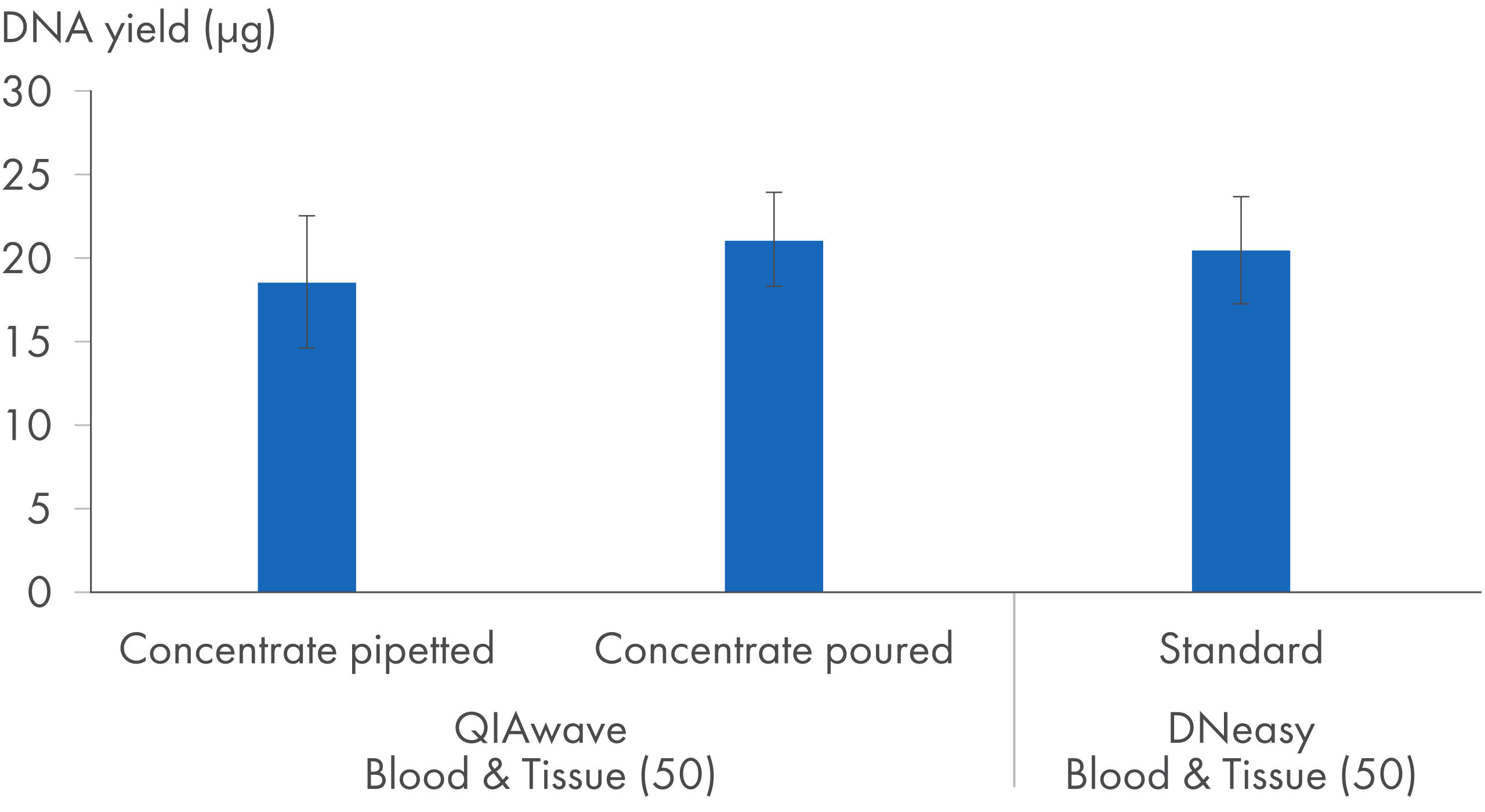
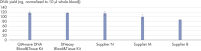
ピペッティングまたは注ぐ方法で調製したQIAwave DNA Blood & Tissue Kit(50)のバッファーとDNeasy Blood & Tissue Kit(50)標準バッファーで得られたDNA収量を比較したところ、いずれの方法でも同等の収量が得られることが確認されました(図「 濃縮バッファーの取り扱い」を参照)。


原理

QIAwave DNA Blood & Tissue Kitは、動物の新鮮または冷凍された血液や組織、細胞、細菌など、さまざまなサンプルタイプから速やかに全DNA(例:ゲノムDNA、ミトコンドリアDNA、病原体DNA)を精製します。
膜はシリカベース膜の結合特性とシンプルなマイクロスピン技術を組み合わせており、DNAは、高濃度のカオトロピック塩が溶液中の水和分子から水分を除去することで、膜に吸着します。バッファー条件により、DNAはシリカ膜に特異的に吸着し、汚染物質や酵素阻害物質が除去されます。
精製プロセス全体でフェノールやクロロホルム抽出、アルコール沈殿は不要で、最小限の操作で済むため、複数のサンプルを簡単に同時に処理できます。

操作手順

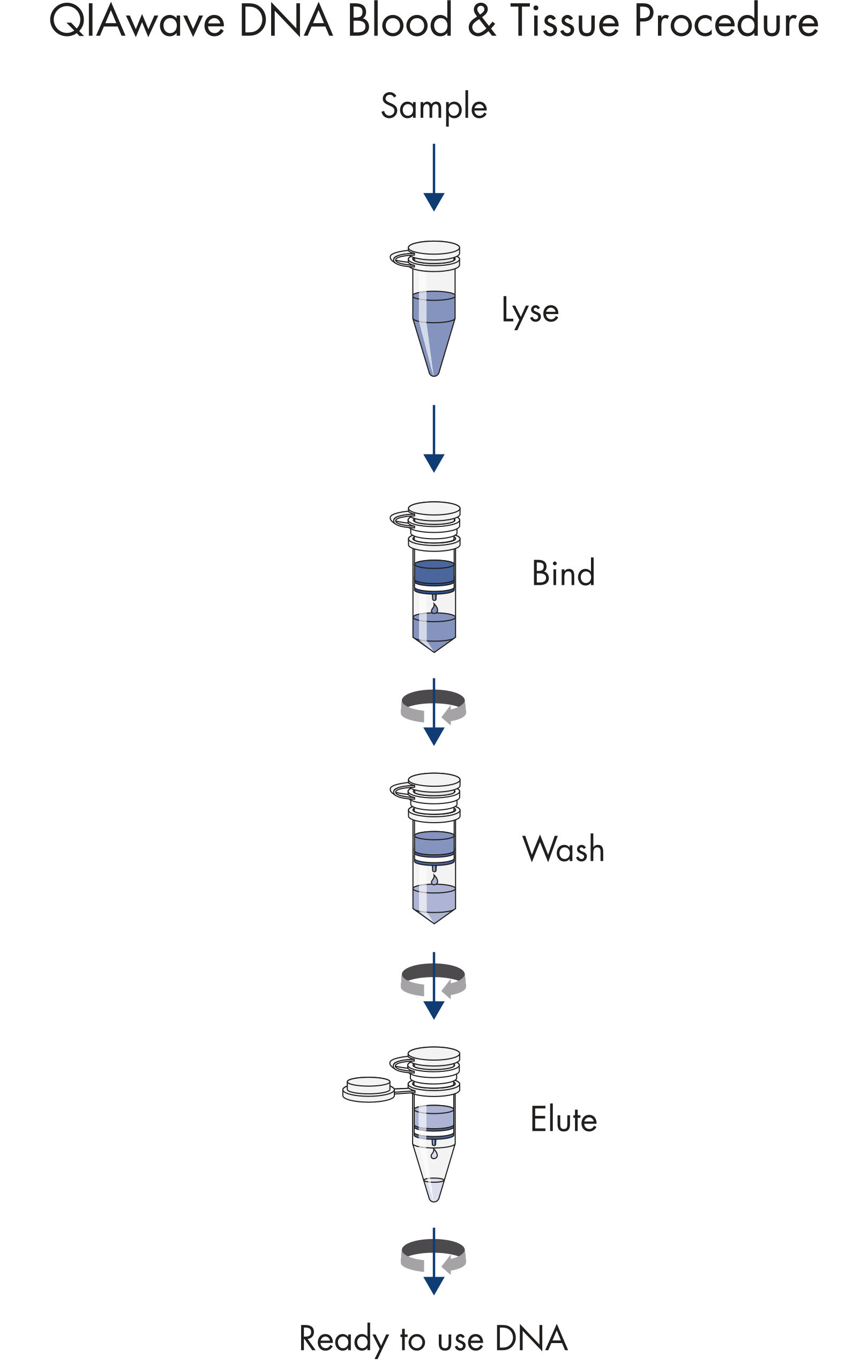
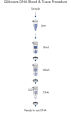
QIAwave DNA Blood & Tissue Kitは、シリカ膜を備えたDNeasy Mini Spin-Columnを使用してDNAを精製します。これにより、精製プロセスは迅速かつ再現性が高く、手動での抽出や有機溶媒を用いた抽出、アルコール沈殿が不要になります(フローチャート「 QIAwave DNA Blood & Tissue Kitのプロセス」)。

高品質DNAを精製するための4つの簡単な工程:

  1. プロテイナーゼKでサンプルを溶解します。バッファー条件は最適なDNA結合条件となっています。
  2. DNeasy Miniスピンカラムに溶解物をロードします。
  3. サンプルを遠心分離します。DNAは選択的に膜と結合しますが、汚染物質は通過します。
  4. 残留する汚染物質と酵素阻害物質は、続く2回の洗浄工程で効果的に除去され、その後、DNAは水またはバッファーに溶出され、すぐに使用できる状態になります。

QIAwaveバッファーは、水および/またはエタノールを追加することで簡単に再構成できる濃縮液として提供されます。詳細については、ハンドブックをご確認ください。QIAwave DNeasy Miniスピンカラムおよび廃棄チューブは個別の袋に入っており、プロトコールを開始する前に組み立てが必要です。少し余分に時間がかかりますが、プラスチック廃棄物を削減することができます。

QIAwave DNA Blood & Tissue Kitは、DNeasy Blood & Tissue Kitプロトコールを使用してQIAcube Connectで自動化できます。


アプリケーション

QIAwave DNA Blood & Tissueを使用することで、以下のアプリケーションを含むすべてのダウンストリームアッセイで直ちに使用できる高品質なDNAが得られます。

  • ライフサイエンス研究
  • 家畜の育種
  • 血統遺伝子型決定
  • 獣医学的病原体研究
  • ルーチン適用検査


裏付けデータと数値

仕様

特徴仕様
ApplicationsJANGS、PCR、real-time PCR、遺伝子型決定
Elution volume100~200 µl
Time per run or per prep20分
Main sample type血液、組織
Formatスピンカラム
Sample amount血液100 µL / 組織25 mg / 培養細胞5 x 10⁶
Processing手動またはQIAcube Connect
Yield5~30 µg
Technologyシリカテクノロジー
Purification of total RNA, miRNA, poly A+ mRNA, DNA or proteinDNA

リソース

クイックスタートプロトコール (1)
パンフレット (2)
キットハンドブック (1)
Certificates of Analysis (1)

よくある質問

How do I safely inactivate biohazardous flow-through material?

Always dispose of potentially biohazardous solutions according to your institution’s waste-disposal guidelines. Although the lysis and binding buffers in QIAamp, DNeasy, and RNeasy kits contain chaotropic agents that can inactivate some biohazardous material, local regulations dictate the proper way to dispose of biohazards. DO NOT add bleach or acidic solutions directly to the sample-preparation waste. Guanidine hydrochloride in the sample-preparation waste can form highly reactive compounds when combined with bleach.
Please access our Material Safety Data Sheets (MSDS) online for detailed information on the reagents for each respective kit.

FAQ-12
Do you have a protocol for purification of total DNA from yeast?

Yes, please follow the Supplementary Protocol 'Purification of total DNA from yeast using the DNeasy Blood & Tissue Kit' (DY13).


FAQ-1253
Do you have a protocol for purification of total DNA from insects?

Yes, please follow the Supplementary Protocol 'Purification of total DNA from insects using the DNeasy Blood & Tissue Kit' (DY14).


FAQ-1254
Do you have a protocol for purification of total DNA from crude lysates?

Yes, please follow the Supplementary Protocol 'Purification of total DNA from crude lysates using the DNeasy Blood & Tissue Kit' (DY15).


FAQ-1255
How can I precipitate genomic DNA using isopropanol?

Alcohol precipitation is commonly used for concentrating, desalting, and recovering nucleic acids. Since less alcohol is required for isopropanol precipitation, this is the preferred method for precipitation of DNA from large volumes. In addition, isopropanol precipitation can be performed at room temperature, which minimizes co-precipitation of salt that interferes with downstream applications.


Procedure

  1. Adjust the salt concentration, for example, with sodium acetate (0.3 M, pH 5.2, final concentration) or ammonium acetate (2.0–2.5 M, final concentration).
  2. Add 0.6–0.7 volumes of room-temperature isopropanol to the DNA solution and mix well.
  3. Centrifuge the sample immediately at 10,000–15,000 x g for 15–30 min at 4°C
  4. Carefully decant the supernatant without disturbing the pellet.
  5. Wash the DNA pellet by adding 1–10 ml (depending on the size of the preparation) of room-temperature 70% ethanol. This removes co-precipitated salt and replaces the isopropanol with the more volatile ethanol, making the DNA easier to redissolve.
  6. Centrifuge at 10,000–15,000 x g for 5–15 min at 4°C.
  7. Carefully decant the supernatant without disturbing the pellet.
  8. Air-dry the pellet for 5–20 min (depending on the size of the pellet).
  9. Redissolve the DNA in a suitable buffer.

Tip: Use a buffer with a pH of 7.5–8.0, as DNA does not dissolve easily in acidic buffers. Often distilled water can have an acidic pH. The addition of EDTA protects the DNA from DNase digestion.

Tip: High-molecular-weight DNA, such as genomic DNA, should be redissolved very gently to avoid shearing. If the DNA pellet does not dissolve easily, heat at 55°C for 1–2 h with gentle shaking.

FAQ-2953
What is the shelf-life for QIAGEN Proteinase K (cat. no. 19131, 19133)?

QIAGEN Proteinase K is stable for up to 1 year after delivery when stored at room temperature. To prolong the shelf-life of Proteinase K, storage at 2–8°C is recommended.

FAQ-3447
Are there important considerations for plasma generation and urine handling?

It is strongly advised to follow the recommendations for preparing sample material provided in the corresponding Protocol Sheet to ensure reliable results.

Plasma: It is recommended to perform plasma separation immediately after blood collection when using EDTA as anticoagulant to prevent the release of genomic DNA into the plasma fraction.

Urine: Because circulating cell-free DNA in non-stabilized urine samples is rapidly degraded after sample collection due to high nuclease activity, eluates may contain no DNA or exhibit low DNA concentration. Therefore, it is recommended to stabilize urine samples. Even when using stabilized urine, it is recommended to perform a centrifugation step immediately after stabilization to prevent the release of genomic DNA from cells. Alternatively, non-stabilized urine samples can be processed immediately after collection and centrifugation using ATL pretreatment and automated DNA extraction as described in the corresponding Protocol Sheet.

FAQ-3699
What water should I use to prepare the buffer concentrates?
We recommend using highly pure water for reconstitution. Ultrapure water (such as the one from MilliQ system, also known as type 1 water) with a resistivity of 18.2 MΩ-cm at 25°C can be used. In case you do not have access to type 1 water, QIAGEN offers Nuclease-Free Water (5 L, cat. No. 129117); and Nuclease-Free Water (1000 mL, cat. No. 129115). It is important that you do not use tap water as this may interfere with the extraction of the target analyte. 
FAQ-3986
What is the new Waste Tube made of?
The new Waste Tube is made from recycled plastic recovered from post-consumer plastic waste. Due to the slight composition differences of the raw material, the color of the tubes may differ from lot to lot. However, this has no effect on its intended use of collecting flow-through from sample binding and membrane washing. After each step, the flow-through is discarded, and the Waste Tube can be reused. The Waste Tube is only used to process waste and should never come into direct contact with the analyte of interest. For detailed instructions, you can watch our instructional video at www.qiagen.com/qiawavewastetube
FAQ-3987
Does the reuse of the Waste Tubes increase the risk of cross-contamination?
No, we were able to prove experimentally that cross-contamination does not occur through the reuse of the Waste Tubes. The Waste Tubes are used to collect the flow-through from the lysis and washing steps, where the flow-through is discarded afterwards. If the flow-through is to be used for further processing, we recommend the use of a Collection Tube
FAQ-3988
I don’t have any glassware in the lab, is the QIAwave kit still a good option for me?
The concept of QIAwave includes the reconstitution of functional buffers. We recommend the use of glass bottles for this procedure. Glass bottles are easier to clean, sterilize and reuse than plastic bottles, further reducing the plastic footprint of the kit. If you do not have the option of using clean glass or plastic bottles, we recommend using our legacy kits. 
FAQ-3989
Are the QIAwave kits based on a different chemistry than the legacy kits?
No, the chemistry between the QIAwave kits and the legacy kits is the same, and so is the performance. The QIAwave buffers come as concentrates, reducing the amount of plastic per bottle while maintaining the same functionality after reconstitution. The advantage of the QIAwave kits is the reduction of materials used for the kits, such as plastics, cardboard and paper. In addition, the QIAwave kits contain Waste Tubes made from 100% post-consumer plastic. 
FAQ-3990
Is there a way to compare the environmental impacts of the kit?
In partnership with My Green Lab, we were able to assess the environmental impact of the kits. My Green Lab ACT (accountability, consistency and transparency) environmental impact factor labels are designed to evaluate and score products on several sustainability criteria. The products are scored from 1 to 10, except for energy and water consumption which are scored as 1 point per kWh or gallon, respectively. A low score means a lower environmental factor.  
FAQ-3991
Can the QIAwave kits be recycled?
We provided an infographic describing the composition of most of our purification kits. You can use the information provided as a guide to recycle kit components and use it to reduce plastic waste in your laboratory. Depending on the specific kit and application, certain kit components may contain or come into contact with chemicals and biological samples, in this case, the components should be disposed of according to local guidelines and regulations. You can find more information on More Sustainable Products (qiagen.com).
FAQ-3992
What is the composition of buffer AE?

The composition of Buffer AE is:

  • 10 mM Tris-Cl
  • 0.5 mM EDTA; pH 9.0.
FAQ-730
Do you have a protocol for the isolation of genomic DNA from sperm?

Yes, we have the following protocols:

  • Isolation of genomic DNA from sperm using the QIAamp DNA Mini Kit; protocol 1 (QA03), long procedure
  • Isolation of genomic DNA from sperm using the QIAamp DNA Mini Kit; protocol 2 (QA04), short procedure
  • Purification of total DNA from animal sperm using the DNeasy Blood and Tissue kit; protocol 1 (DY02), long procedure
  • Purification of total DNA from animal sperm using the DNeasy Blood and Tissue kit; protocol 2 (DY03), short procedure
  • Purification of DNA from epithelial cells mixed with sperm cells using the QIAamp DNA Micro Kit (QA40).
FAQ-909
Do you have a protocol for isolation of genomic DNA from saliva and mouthwash?

Yes, we have the following protocols:

  • Isolation of genomic DNA from saliva and mouthwash using the QIAamp DNA Mini Kit; vacuum procedure (QA19v)
  • Isolation of genomic DNA from saliva and mouthwash using the QIAamp DNA Mini Kit; spin procedure (QA19s)
  • Isolation of genomic DNA from saliva using the DNeasy Blood & Tissue Kit; spin procedure (DY07)
FAQ-917
Do you have a protocol for the isolation of DNA from soft tissues using the TissueLyser?