
✓ 24/7 automatic processing of online orders
✓ Knowledgeable and professional Product & Technical Support
✓ Fast and reliable (re)-ordering
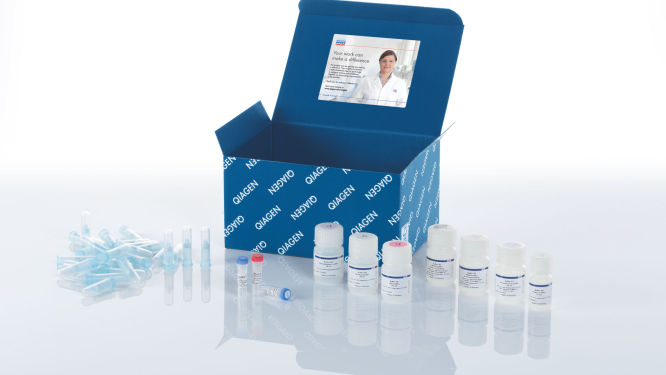
QIAsprint DNA/RNA Plant PrepSet (384)
Cat no. / ID. 580669
Buffer RLT for 384 DNA/RNA preparations from plant samples
KitENNewAccessories
PrepSet
Essential Kit
Add ons
Type
Plants
Inhibitor-rich
✓ 24/7 automatic processing of online orders
✓ Knowledgeable and professional Product & Technical Support
✓ Fast and reliable (re)-ordering
Features
- Purifies DNA and RNA from plant samples - Consistent, pure nucleic acids for all downstream applications
- Greater Flexibility Through Modular Kits: Uses “Essential Kits” and “PrepSets” for “Plant” — allows easy protocol adaptation
- Streamlined automation — Requires no manual intervention after the run starts
- Ships at Ambient Temperature—no dry ice required
Product Details
The QIAsprint modular kit system for DNA/RNA from plant is a modular magnetic-bead based system for high throughput nucleic acid isolation. The system combines the flexibility of modular design with the power of magnetic-bead–based purification, enabling fully automated processing on the QIAsprint Connect without manual intervention including an optional fully automated on board-lysis step.
The modular kit system consists of dedicated modules that can be flexibly combined or exchanged depending on sample type and workflow needs. For genomic DNA isolation from cells and tissue we recommend the following modules:
- QIAsprint DNA/RNA Plant PrepSet (384): Designed for efficient pretreatment of plant samples.
- QIAsprint Essential Kit A (384): Provides the magnetic beads and wash buffers required for DNA/RNA purification. The bead-based technology ensures high yield, reproducibility, and recovery of high-quality nucleic acids.
- All modules are designed and optimized for fully automated processing of up to 384 samples on the QIAsprint Connect. The platform ensures minimal hands-on time and reproducible performance.
All modules are designed and optimized for fully automated processing of up to 384 samples on the QIAsprint Connect. The platform ensures minimal hands-on time and reproducible performance.
Performance
The QIAsprint DNA/RNA Plant workflow delivers nucleic acid yields comparable to or higher than those obtained with other leading magnetic-bead–based purification systems, such as MagMAX kits. This performance is consistent even with challenging sample types such as fibrous tissues or fatty (see Comparable recovery).
Digital PCR analysis demonstrates higher DNA concentrations in samples processed with the QIAsprint instrument (see Higher nucleic acid concentration).
Principle
The QIAsprint DNA Plant application provides an automated high-throughput purification of total DNA (i.e., genomic, chloroplast, and mitochondrial DNA) from plant material, such as leaves and seeds, using the QIAsprint Connect instrument. Magnetic-particle technology enables purification of high-quality nucleic acids that are free of proteins, nucleases, and other impurities. The purified nucleic acids are ready to use for highly sensitive detection in downstream assays, such as amplification, or other enzymatic reactions. For the purification of DNA from inhibitor-rich plants or plant-associated bacteria and fungi, QIAsprint PowerExtract IRT PrepSet has been developed to be used on QIAsprint Connect instrument. For more details, refer to the QIAsprint PowerExtract IRT Application Guide.
If the workflow needs to be adapted for other sample types or input materials, the flexibility of the QIAsprint modular system allows users to combine the QIAsprint DNA Tissue/Cells PrepSet with other compatible Essential Kits (Link to Essentail kit page). For detailed guidance, refer to the Essential Kit page and the QIAsprint Application Wheel. In addition to combining different modules, nearly all buffers and reagents used within the system are available as standalone items, offering additional customization options for specialized workflows (see Accessory Finder).
Procedure
In the QIAsprint DNA Tissue/Cells workflow, samples undergo a straightforward pretreatment and automated purification process. Fresh, frozen, or lyophilized starting material is mechanically disrupted to give a fine powder. The powder is resuspended in lysis buffer, carefully mixed, and then sedimented by a short centrifugation step. (see QIAsprint DNA Plant workflow).
The cleared lysates are transferred to QIAsprint Prep Plate Insert (32) (cat. no. 582226). DNA binds to the silica surface of the magnetic particles, then efficiently washed with alcohol-containing buffers, followed by an air drying step. High-quality DNA is eluted in water or low-salt buffer. Wash plates, and the elution plate are prepared according to the protocol and placed into the plate hotels. All plates and hotels are then loaded onto the QIAsprint Connect, and the appropriate protocol is selected. The instrument performs fully automated magnetic-bead–based bind, wash, and elute steps. (see QIAsprint DNA Plant workflow).
Applications
DNA purified with the QIAsprint DNA Plant workflow is highly suitable for RT-PCR, digital PCR (dPCR) or next-generation sequencing (NGS) as well as long-read sequencing application (depending on disruption and lysis method).
Resources
Kit Handbooks & Protocols (1)
Safety Data Sheets (1)
Certificates of Analysis (1)
Certificates and labels (1)
Specialized Protocols (3)