
Ist Ihnen Nachhaltigkeit wichtig?
Wenn Sie eine umweltfreundlichere Alternative zu dem ausgewählten Produkt suchen, sind Sie hier genau richtig.
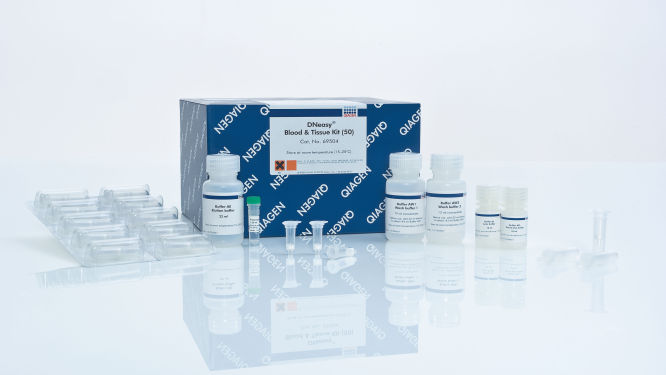
DNeasy Blood & Tissue Kit (50) icon_0368_ls_gen_eco_friendly-s
Kat.-Nr. / ID. 69504
50 DNeasy Mini Spin Columns, Proteinase K, Puffer, Collection Tubes (2 ml)
Anmelden Um Ihre Preise zu sehen.
KitENNew
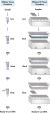
DNeasy Blood & Tissue Kit
DNeasy Blood & Tissue QIAcube Kit
Eco-friendlier kit
SäulentypPlattentyp
Mini
96-well
Präparationen
50
250
DNeasy Blood & Tissue Kits sind für molekularbiologische Anwendungen vorgesehen. Diese Produkte sind nicht zur Diagnose, Prävention oder Behandlung einer Erkrankung vorgesehen.
Ist Ihnen Nachhaltigkeit wichtig?
Wenn Sie eine umweltfreundlichere Alternative zu dem ausgewählten Produkt suchen, sind Sie hier genau richtig.
Eigenschaften
- Standardisierte Methode für eine Vielzahl von Probentypen
- Hohe Ausbeute selbst bei spezialisierten Proben
- Qualitativ hochwertige DNA
- Optimierte Protokolle für eine große Bandbreite an Ausgangsmaterialien
- Spin-Säulen- und 96-Well-Hochdurchsatzformate
- Automatisieren Sie Arbeitsabläufe auf dem QIAcube Connect
Angaben zum Produkt
DNeasy Blood & Tissue Kits extrahieren DNA schnell mit einem auf Silika basierenden, phenol- und chloroformfreien Verfahren im Spin-Säulen- und 96-Well-Platten-Format. Bei den meisten Proben macht die direkte Lyse mit Proteinase K einen mechanischen Aufschluss überflüssig, wodurch sich der manuelle Zeitaufwand verringert. Maßgeschneiderte Protokolle für spezifische Proben gewährleisten eine konsistente Extraktion qualitativ hochwertiger DNA, die sich perfekt für die biowissenschaftliche, Genotypisierungs- und veterinärmedizinische Pathogenforschung eignet. Die Kits können auf dem QIAcube Connect automatisiert werden.
Eine nachhaltigere Alternative bietet das QIAwave DNA Blood & Tissue Kit, das den Verbrauch von Plastik und Pappkarton um bis zu 62 % bzw. 58 % reduziert. Das Kit enthält Abfallröhrchen aus 100 % recyceltem Kunststoff, die während des gesamten Verfahrens wiederverwendet werden können. QIAwave-Puffer liegen als Konzentrat vor, wodurch der Kunststoffverbrauch pro Flasche um bis zu 90 % gesenkt wird. Trotz der optischen Unterschiede ist das QIAwave Kit genauso benutzerfreundlich wie das Standardkit, mit identischer Chemie und Leistung. Hinweis: Für die Rekonstitution der Puffer werden sterile Glasflaschen benötigt.
In Zusammenarbeit mit My Green Lab haben wir die Umweltauswirkungen des DNeasy Blood & Tissue Kit (50/250) und des QIAwave DNA Blood & Tissue Kit (50/250) bewertet. My Green Lab ACT-Umweltverträglichkeitslabels dienen der Bewertung und Einstufung von Produkten auf der Grundlage verschiedener Nachhaltigkeitskriterien, darunter:
- Herstellung
- Verantwortungsvolles Chemikalienmanagement
- Nachhaltige Produkt- und Verpackungsmaterialien
- Entsorgung der Verpackung am Ende des Lebenszyklus
Die Produkte werden von 1–10 bewertet, mit Ausnahme des Energie- und Wasserverbrauchs, der mit 1 Punkt/kWh bzw. Gallone (3,785 Liter) bewertet wird. Eine niedrige Punktzahl bedeutet eine geringere Umweltbelastung – siehe Abbildungen „DNeasy Blood & Tissue Kit und QIAwave DNA Blood & Tissue Kit ACT-Umweltverträglichkeitslabels USA ( 50/ 250), EU ( 50/ 250) und Vereinigtes Königreich ( 50/ 250)“.


Leistung
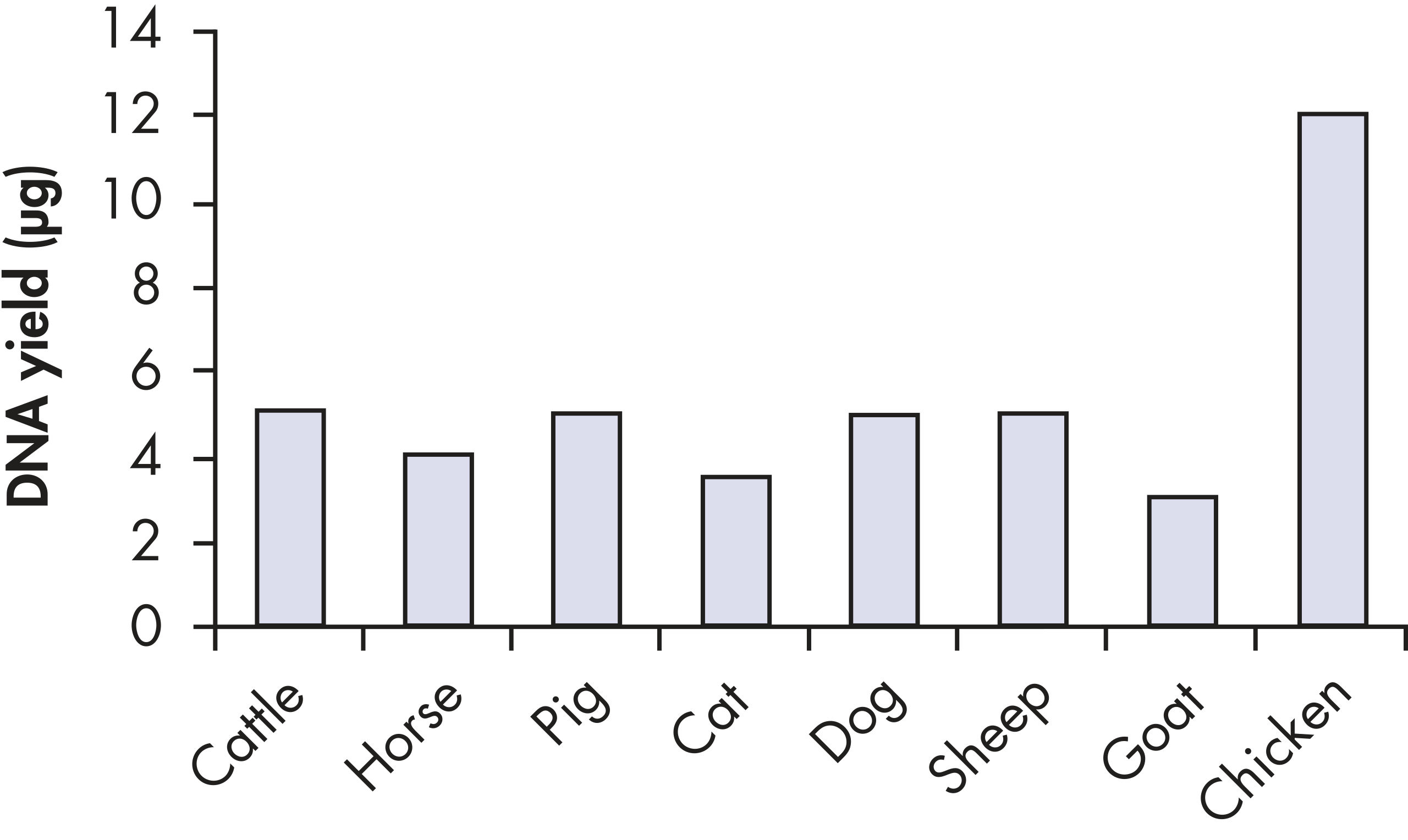
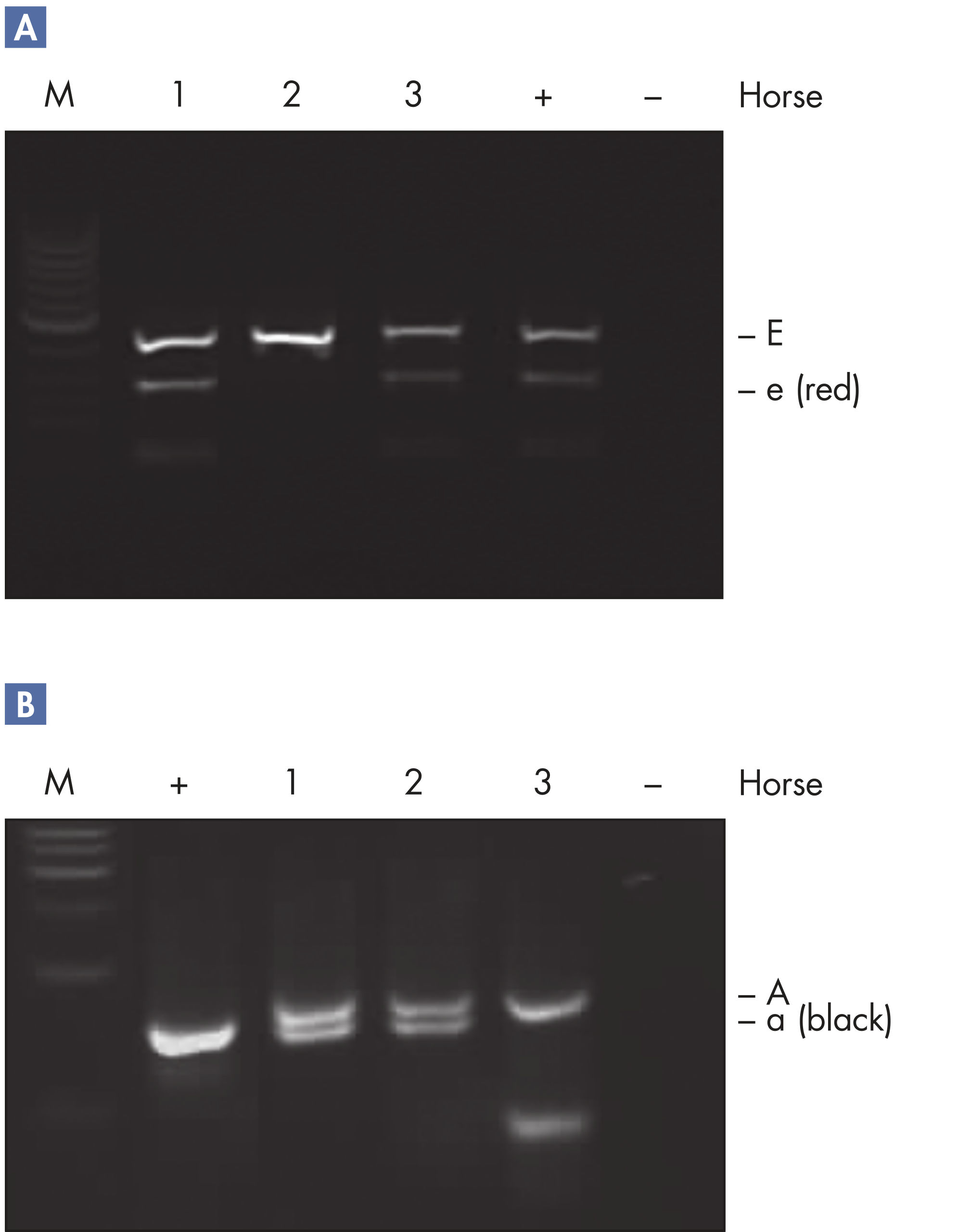
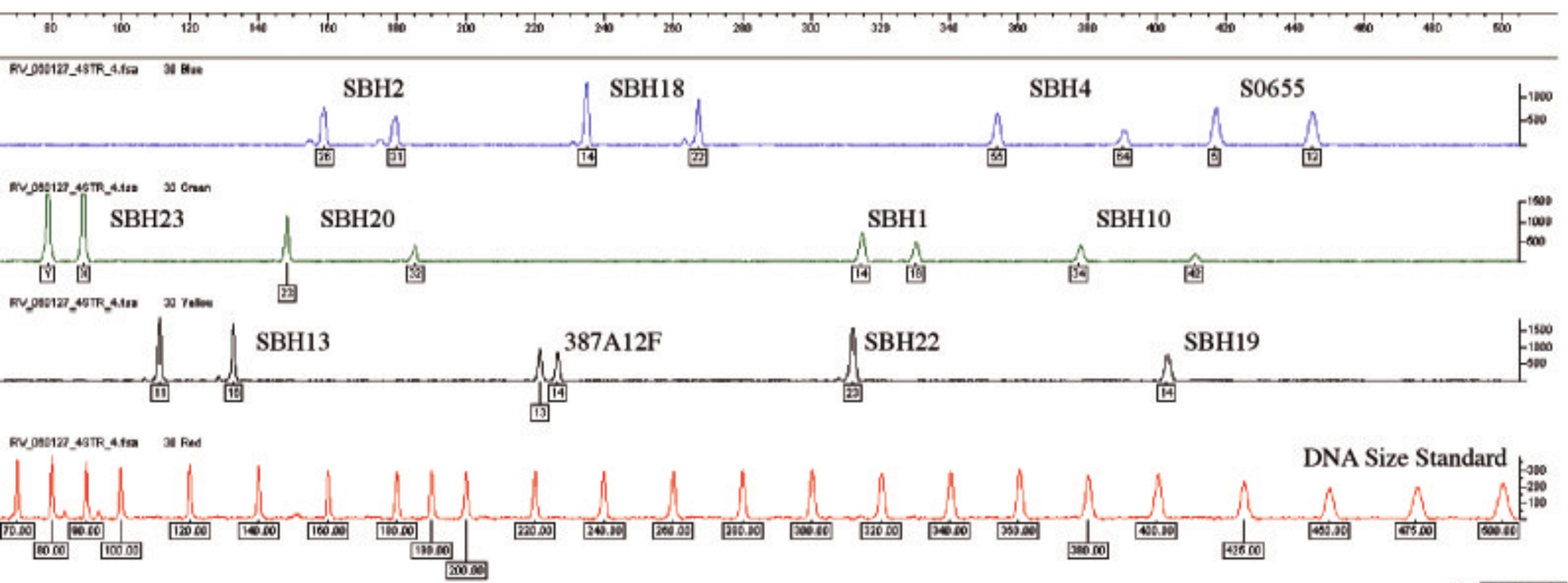
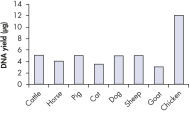
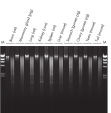
Das effiziente Verfahren der DNeasy und QIAwave DNA Blood & Tissue Kits ermöglicht eine hohe Ausbeute an Gesamt-DNA aus tierischen Blut- und Gewebeproben (siehe Tabelle Typische DNA-Ausbeute aus tierischen Geweben und Abbildung DNA-Ausbeuten). Optimierte Protokolle gewährleisten hohe Ausbeuten bei nicht standardmäßigen Proben wie Tierhaaren (siehe Genotypisierung von Pferden) sowie bei Zellkulturen, fixierten Geweben oder grampositiven und -negativen Bakterien. Für die DNA-Aufreinigung aus Hefen, Insekten, Haaren und anderen Probentypen sind spezielle Online-Protokolle verfügbar.
Da die Chemie des QIAwave DNA Blood & Tissue Kit und des DNeasy Blood & Tissue Kits identisch ist, weisen sie die gleiche Leistung auf. Beide Kits zeigten eine überragende Leistung im Vergleich zu Konkurrenzprodukten (siehe Abbildung „Leistung des QIAwave DNA Blood & Tissue Kit“).
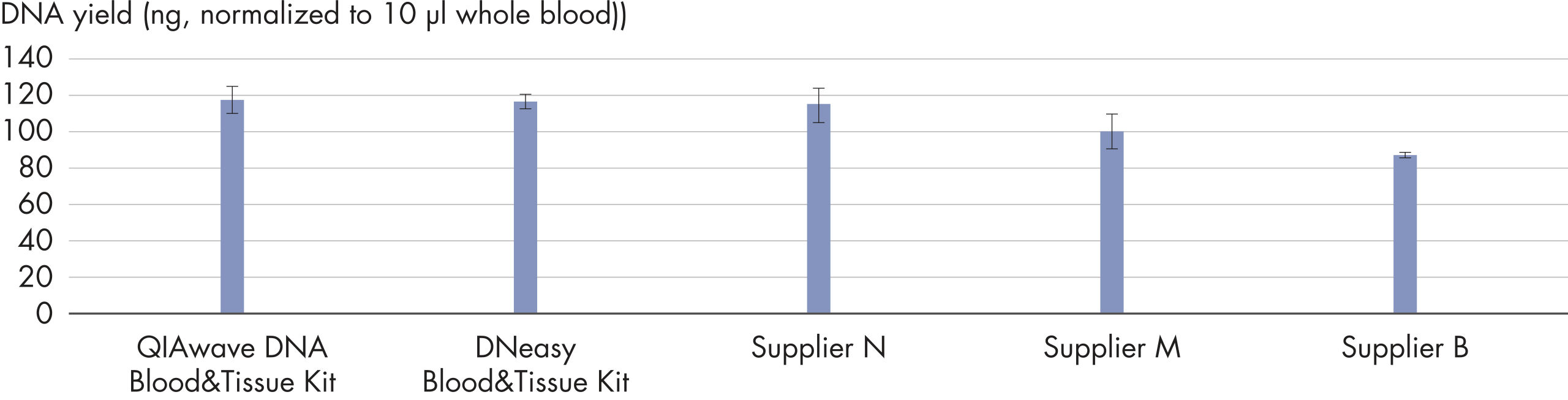
Bei Einhaltung des QIAwave DNA Blood & Tissue Kit-Standardprotokolls können hohe Ausbeuten an Gesamt-DNA aus tierischen Blut- und Gewebeproben isoliert werden (siehe Tabelle – „Typische DNA-Ausbeute aus tierischem Gewebe mit QIAwave DNA Blood & Tissue“ und Abbildung „ DNA-Ausbeuten“). Darüber hinaus wurden die Protokolle optimiert, um hohe Ausbeuten bei nicht standardmäßigen Proben zu gewährleisten, einschließlich:
- Tierhaare
- Zellkulturen
- Gram-positive und -negative Bakterien
- Hefe
- Insekten
- Andere Probenarten
| Quelle | Menge | DNA (µg) |
| Säugetierblut | 100 µl | 3–6 |
| Vogelblut | 5 µl | 9–40 |
| HeLa-Zellen | 2 x 10⁶ | 15–25 |
| Leber | 25 mg | 10–30 |
| Gehirn | 25 mg | 15–30 |
| Niere | 25 mg | 15–30 |
| Milz | 10 mg | 5–30 |
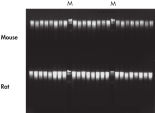
| Mausschwanz | 1,2 cm (Spitze) | 10–25 |
| Rattenschwanz | 0,6 cm (Spitze) | 20–40 |
| Schweineohr | 25 mg | 10–30 |
| Pferdehaar | 10 Haare | 2–4 |
| Fischflosse | 20 mg | 10–20 |
| Fischlaich (Makrele) | 10 mg | 5–10 |
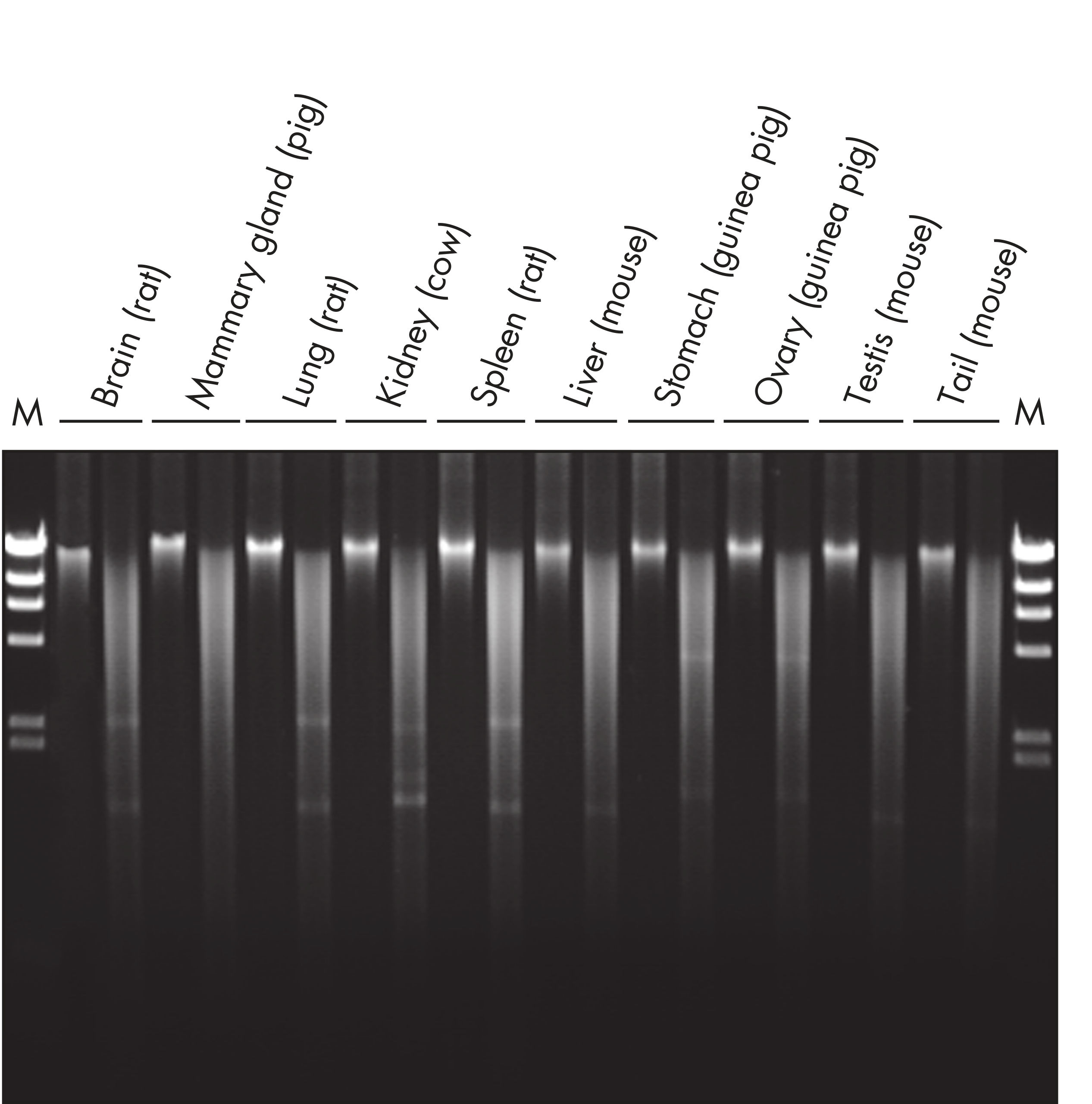
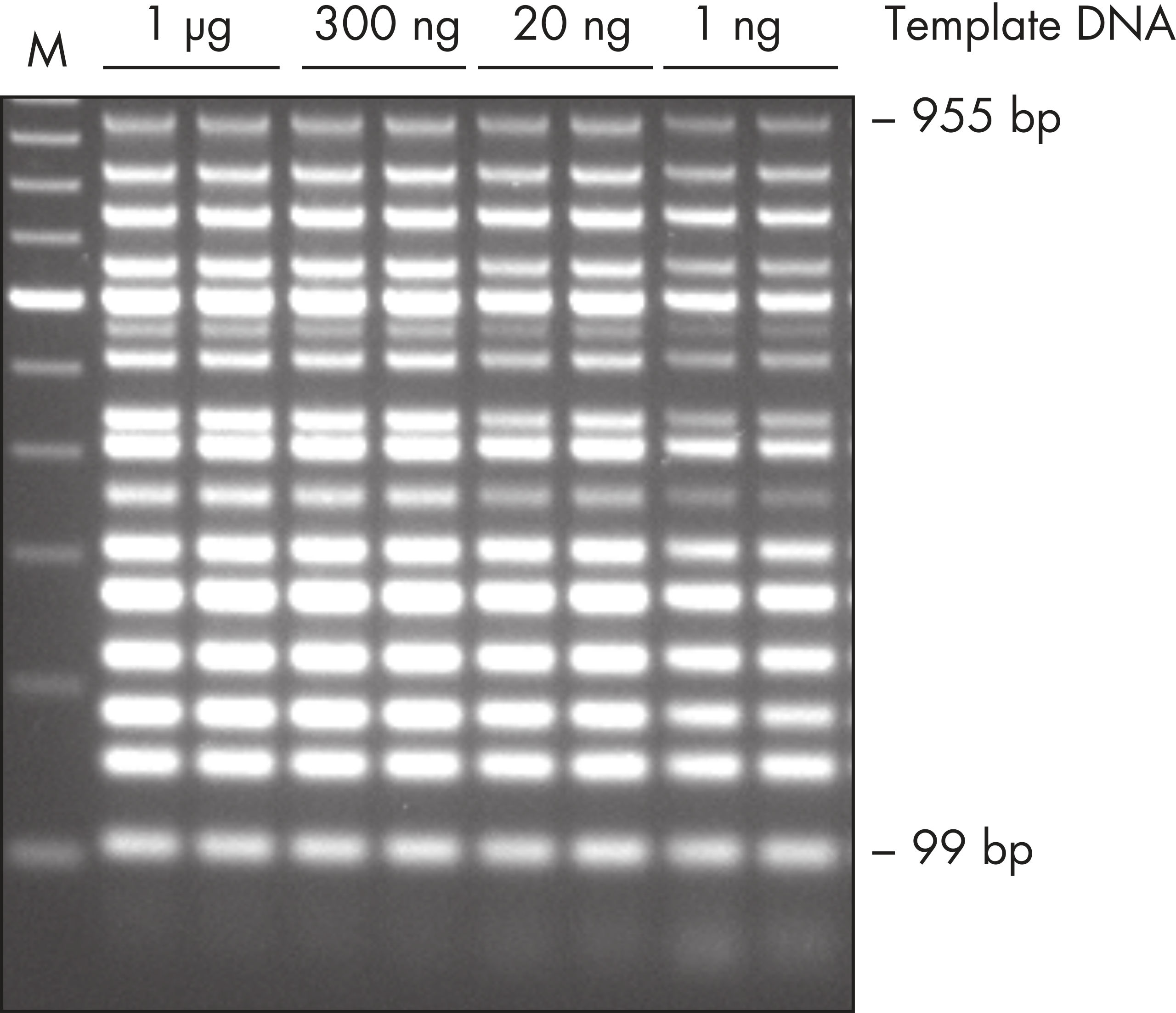
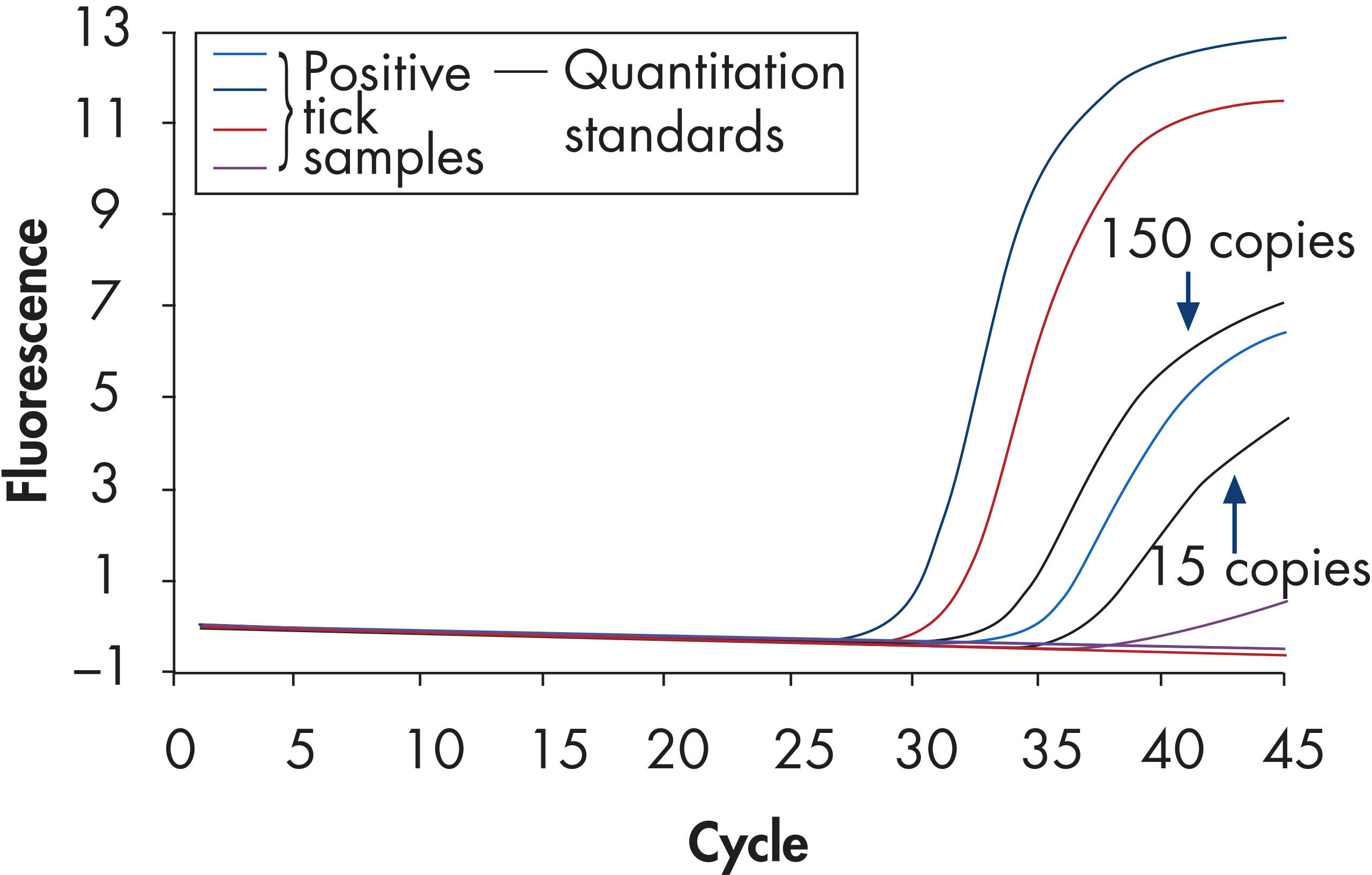
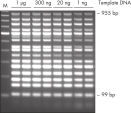
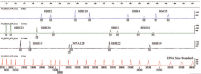
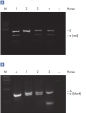
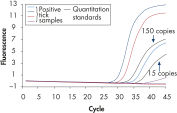
DNeasy Blood & Tissue Kits vereinfachen die Aufreinigung von DNA aus einem breiten Spektrum von Probentypen, einschließlich Tierarten, die häufig in biowissenschaftlichen, veterinärmedizinischen und Genotypisierungsanwendungen vorkommen (siehe Qualitativ hochwertige DNA). Die aufgereinigte DNA ist frei von PCR-Inhibitoren und ermöglicht einen sensitiven Nachweis in Standard-, Multiplex- (siehe Effiziente 16-plex-PCR) und Real-time PCR (siehe Real-time PCR). DNeasy Blood & Tissue Kits liefern zuverlässige Ergebnisse – von der Laboranalyse transgener Mäuse (siehe Hochdurchsatzaufreinigung) bis hin zu Viehzuchtprogrammen (siehe Genotypisierung von Schweinen) und Stammbaum-Genotypisierung. Routinetest-Anwendungen lassen sich mit dem DNeasy 96 Blood & Tissue Kit leicht hochskalieren (siehe Hochdurchsatzaufreinigung).
Prinzip
DNeasy und QIAwave DNA Blood & Tissue Kits sind für die schnelle Aufreinigung von Gesamt-DNA (z. B. genomische, mitochondriale und pathogene DNA) aus einer Vielzahl von Probenquellen, einschließlich frischem oder gefrorenem tierischem Gewebe und Zellen, Blut oder Bakterien, konzipiert.
Die DNeasy-Membran kombiniert die Bindungseigenschaften einer silikabasierten Membran mit einfacher Mikrospin-Technologie oder mit dem QIAGEN 96-Well-Plate Centrifugation System. DNA adsorbiert an der DNeasy-Membran in Gegenwart hoher Konzentrationen chaotroper Salze, die hydratisierten Molekülen in Lösung Wasser entziehen. Die Pufferbedingungen in den DNeasy Blood & Tissue-Verfahren sind so konzipiert, dass eine spezifische Adsorption der DNA an die Silikamembran und eine optimale Entfernung von Verunreinigungen und Enzyminhibitoren möglich ist.
Für die Aufreinigung ist keine Phenol- oder Chloroformextraktion oder Alkoholausfällung erforderlich und der manuelle Aufwand ist minimal. Dadurch eignen sich DNeasy Blood & Tissue Kits hervorragend für die gleichzeitige Verarbeitung mehrerer Proben. Für Anwendungen mit höherem Durchsatz ermöglicht das DNeasy 96 Blood & Tissue Kit die gleichzeitige Verarbeitung von 96 oder 192 Proben.
Verfahren
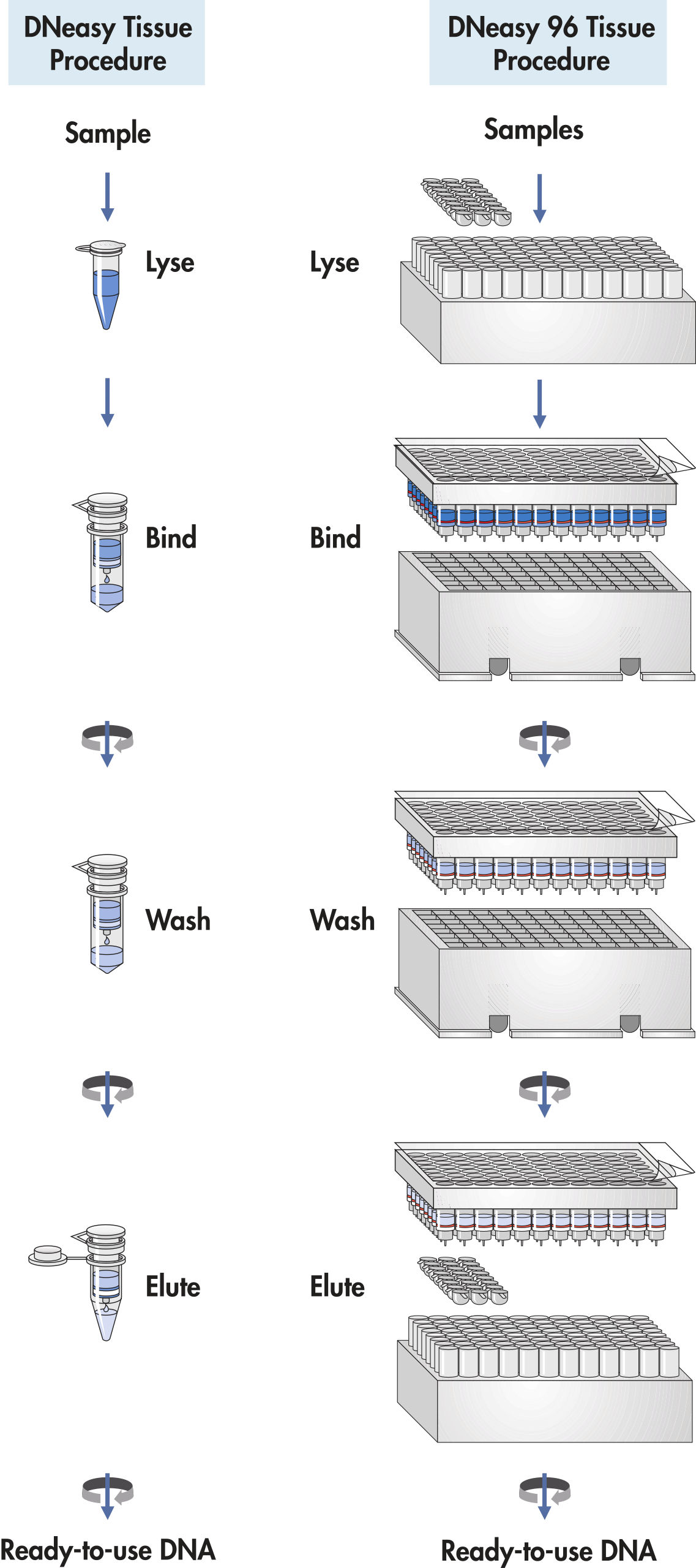
Die zuverlässige Silika-Membrantechnologie in praktischen Spin-Säulen- oder 96-Well-Formaten gewährleistet eine schnelle und reproduzierbare DNA-Aufreinigung und macht eine organische Extraktion und Alkoholausfällung überflüssig (siehe DNeasy Mini- und -96-Verfahren). Die Proben werden zunächst mit Proteinase K lysiert. Die Pufferbedingungen werden so eingestellt, dass sie optimale DNA-Bindungsbedingungen bieten, und das Lysat wird auf die DNeasy Mini-Spin-Säule oder die DNeasy-96-Platte geladen. Während der Zentrifugation wird die DNA selektiv an die DNeasy-Membran gebunden, während Verunreinigungen durchlaufen. Verbleibende Verunreinigungen und Enzyminhibitoren werden in zwei effizienten Waschschritten entfernt. Die DNA wird anschließend in Wasser oder Puffer eluiert und ist gebrauchsfertig.
Die DNeasy Mini-Spin-Säulen im DNeasy Blood & Tissue Kit sind in Entnahmeröhrchen vorverpackt und einzeln versiegelt, um Bequemlichkeit und Sicherheit zu gewährleisten. Das Aufreinigungsverfahren mit DNeasy Mini-Spin-Säulen kann auf dem QIAcube Connect automatisiert werden. Das DNeasy 96 Blood & Tissue Kit ermöglicht eine Hochdurchsatzverarbeitung in einem 96-Well-Format unter Verwendung des QIAGEN 96-Well-Plate Centrifugation System.
Standardprotokolle für DNeasy Blood & Tissue Kits können nahtlos über das TRACKMAN Connected-System ausgeführt werden.
Anwendungen
DNeasy Blood & Tissue Kits und QIAwave DNA Blood & Tissue Kits liefern qualitativ hochwertige DNA, die in allen nachgelagerten Assays, einschließlich dPCR- und NGS-Anwendungen, verwendet werden kann, und zwar in folgenden Bereichen:
- Biowissenschaftliche Forschung
- Viehzucht
- Stammbaum-Genotypisierung
- Erforschung von Pathogenen in der Veterinärmedizin
- Routinetests
Ergänzende Daten und Abbildungen
DNA Blood & Tissue Kits (50) ACT-Umweltverträglichkeitslabel USA.
Die ACT-Umweltverträglichkeitslabels wurden dafür entwickelt, Produkte nach verschiedenen Nachhaltigkeitskriterien zu bewerten und einzustufen. Die Produkte werden mit 1–10 bewertet, mit Ausnahme von Energie- und Wasserverbrauch, die mit 1 Punkt pro kWh bzw. Gallone (3,785 Liter) bewertet werden. Je niedriger die Punktzahl, desto geringer die Umweltbelastung. Das QIAwave DNA Blood & Tissue Kit (50) hat in den USA einen 21,5 % niedrigeren EIF als das DNeasy Blood & Tissue Kit (50).


Spezifikationen
| Eigenschaften | Spezifikationen |
|---|---|
| Applications | PCR, Real-time PCR, Genotypisierung |
| Elution volume | 100–200 µl |
| Time per run or per prep | 20 Minuten – 1 Stunde |
| Main sample type | Blut, Gewebe |
| Format | 96-Well-Platte, Spin-Säule |
| Sample amount | 100 µl/25 mg |
| Processing | Manuell |
| Yield | 6 µg/30 µg |
| Technology | Silika-Technologie |
| Purification of total RNA, miRNA, poly A+ mRNA, DNA or protein | DNA |
Ressourcen
Scientific Posters (7)
Supplementary Protocols (4)
Quick-Start Protocols (3)
User-Developed Protocols (8)
Broschüren und Leitfäden (5)
Safety Data Sheets (6)
Kit Handbooks (2)
Certificates of Analysis (1)
Publikationen
The unique 16S rRNA genes of piezophiles reflect both phylogeny and adaptation.
Appl Environ Microbiol; 2006; 73 (3):838-45 2006 Dec 8 PMID:17158629
Assays to detect beta-tubulin codon 200 polymorphism in Trichuris trichiura and Ascaris lumbricoides.
PLoS Negl Trop Dis; 2009; 3 (3):e397 2009 Mar 24 PMID:19308251
Whole genome amplification for array comparative genomic hybridization using DNA extracted from formalin-fixed, paraffin-embedded histological sections.
J Mol Diagn; 2009; 11 (2):109-16 2009 Feb 5 PMID:19197000
Real-time PCR detection of pathogenic microorganisms in roof-harvested rainwater in Southeast Queensland, Australia.
Appl Environ Microbiol; 2008; 74 (17):5490-6 2008 Jul 11 PMID:18621865
MicroRNA-137 targets microphthalmia-associated transcription factor in melanoma cell lines.
Cancer Res; 2008; 68 (5):1362-8 2008 Mar 1 PMID:18316599
FAQ
How do I safely inactivate biohazardous flow-through material?
Do you have a protocol for purification of total DNA from yeast?
Do you have a protocol for purification of total DNA from insects?
Do you have a protocol for purification of total DNA from crude lysates?
Do you have data showing effects of sample size on DNA yield and purity using the DNeasy 96 Blood & Tissue kit?
What dedicated QIAcube Kits are available?
How can I precipitate genomic DNA using isopropanol?
303 - Can I use my own lysis buffer with the DNeasy Blood & Tissue or QIAamp DNA Mini Kit?
3192 - Is QIAGEN Protease compatible with Buffer ATL?
Is it possible to stop the DNeasy tissue protocol and store the tissue lysates after digesting in buffer ATL and Proteinase K?
What is the shelf-life for QIAGEN Proteinase K (cat. no. 19131, 19133)?
Is the quality and size of DNA extracted with the DNeasy Blood & Tissue kit good enough to generate DNA-libraries for next generation sequencing?
Are there important considerations for plasma generation and urine handling?
What QIAGEN kit can I use to isolate DNA from food products to test for genetically modified organisms (GMOs)?
How can I improve DNA yields from very tough tissues using the DNeasy Blood & Tissue Kit or the QIAamp DNA Mini Kit?
What water should I use to prepare the buffer concentrates?
What is the new Waste Tube made of?
Does the reuse of the Waste Tubes increase the risk of cross-contamination?
I don’t have any glassware in the lab, is the QIAwave kit still a good option for me?
Are the QIAwave kits based on a different chemistry than the legacy kits?
Is there a way to compare the environmental impacts of the kit?
Can the QIAwave kits be recycled?
What is the expected yield of genomic DNA isolated from bacteria with the DNeasy Blood & Tissue or QIAamp DNA Mini Kit?
What can be used as an alternative to the A260 measurement for quantification of small amounts of RNA and DNA?
What is the composition of buffer AE?
Do you have a protocol for isolation of genomic DNA from insects?
Do you have a protocol for the isolation of genomic DNA from bone?
Do you have a protocol for the isolation of genomic DNA from sperm?
Do you have a protocol for Acetyl Cysteine (NALC) treatment of viscous samples?
Do you have a protocol for isolation of genomic DNA from saliva and mouthwash?
Do you have a protocol for the isolation of DNA from soft tissues using the TissueLyser?
Do you have a protocol for the isolation of viral DNA from stool?
Do you have a protocol for isolation of genomic DNA from saliva using the DNeasy Blood & Tissue Kit?
Do you have a protocol for purification of DNA from cultured animal cells using the DNeasy 96 Blood & Tissue Kit?